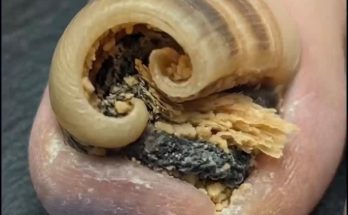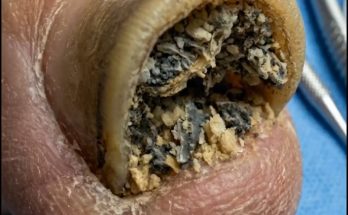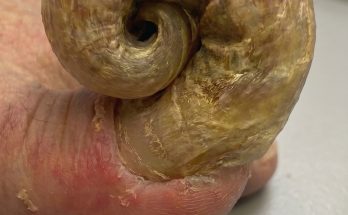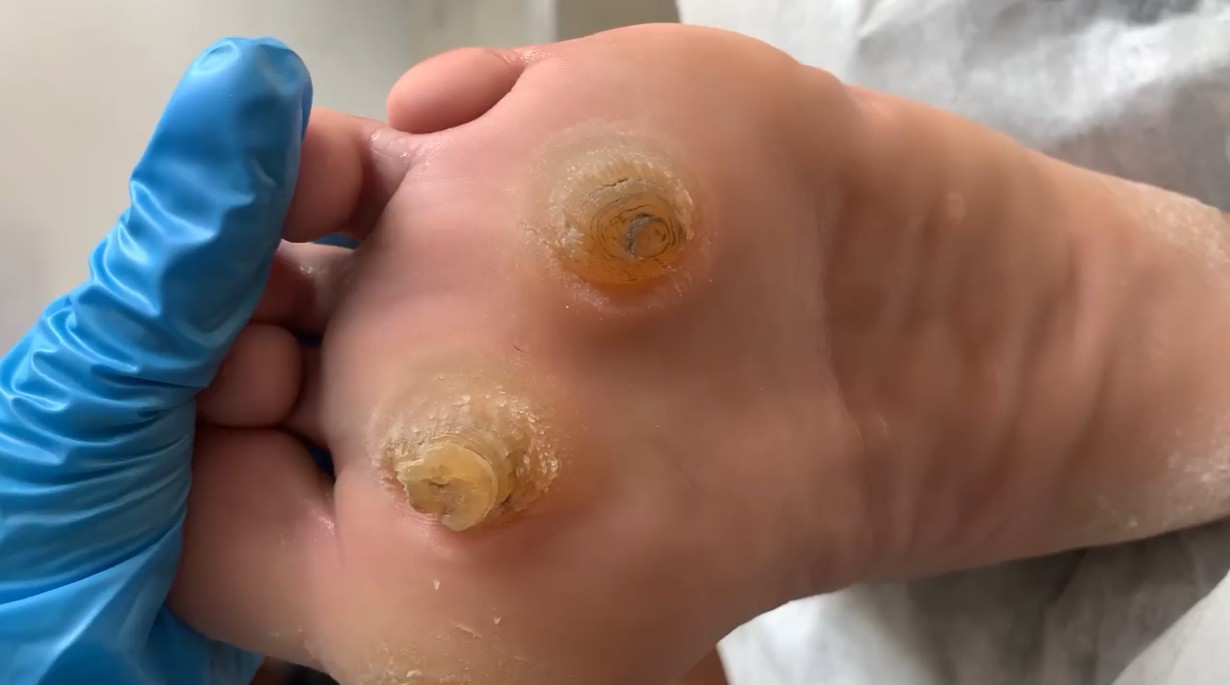
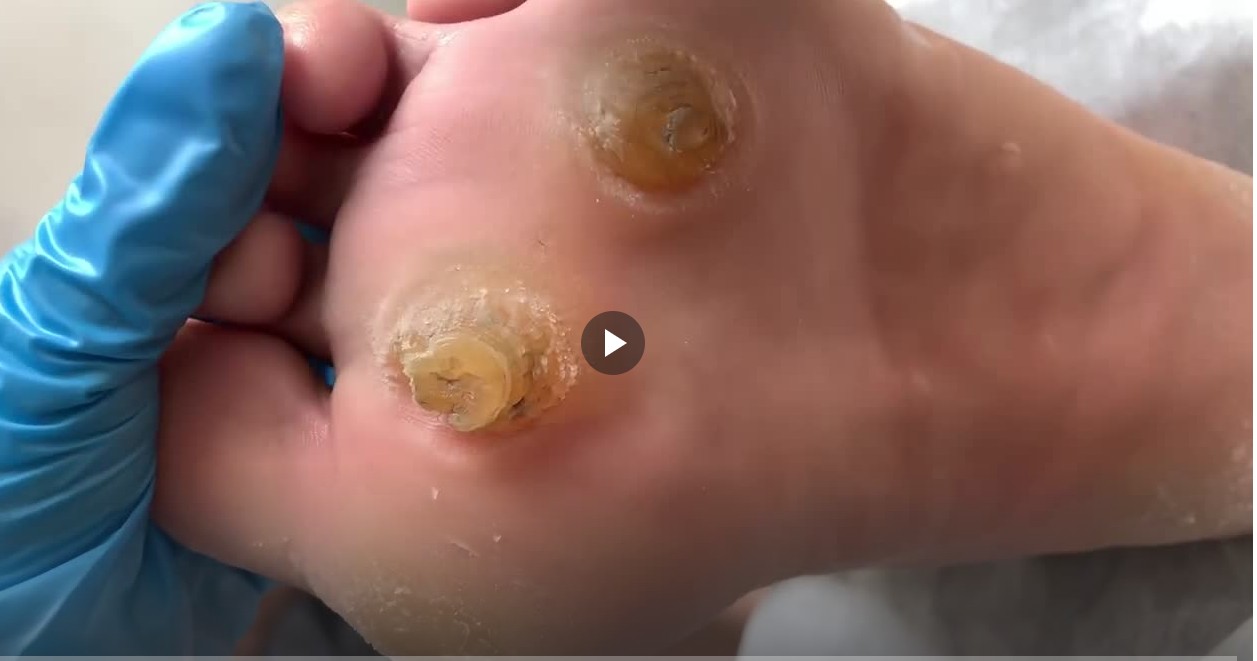
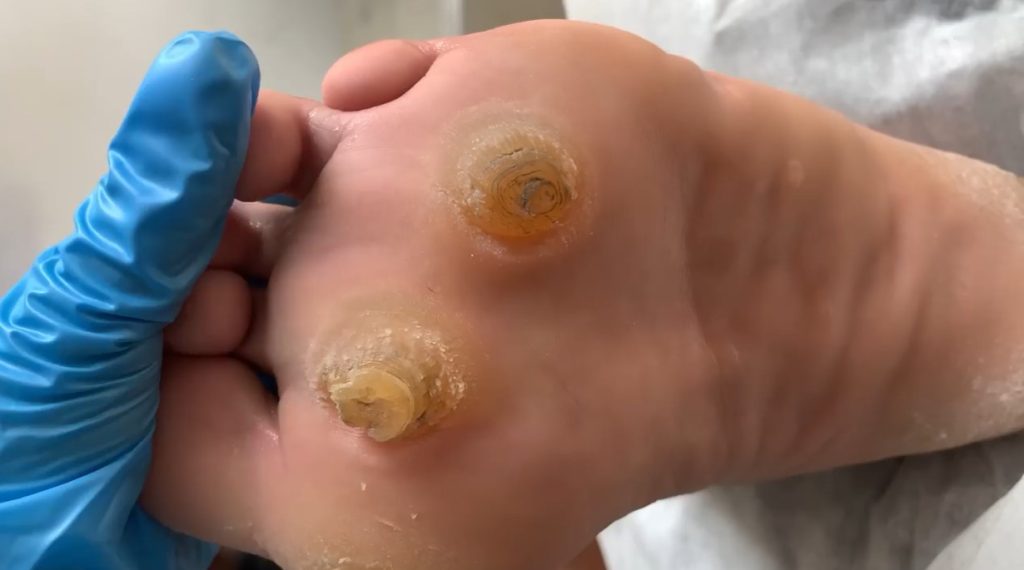
The image above shows two deep plantar corns on the sole of the foot, clearly visible as thick, circular areas of hardened skin with a central core. These lesions are not simple calluses. Plantar corns develop when constant pressure or friction forces layers of dead skin to build inward, forming a dense core that presses into deeper tissue.
This condition is common but often underestimated. When left untreated, plantar corns can become extremely painful and interfere with daily activities such as walking or standing.
What Causes Plantar Corns?
Plantar corns usually form due to repeated pressure on specific points of the foot. Tight or ill-fitting shoes, high heels, uneven weight distribution, foot deformities, or prolonged standing can all contribute. Over time, the skin reacts to pressure by thickening as a protective mechanism, but instead of spreading outward, the skin hardens inward.
Unlike regular calluses, corns have a distinct center that can press against nerves, causing sharp pain with each step.
Symptoms You Should Not Ignore
Common symptoms include localized pain when walking, a sensation of stepping on a small stone, thick yellowish skin, and a clearly defined circular shape. In some cases, corns may become inflamed or crack, increasing the risk of infection.
People with diabetes or poor circulation should be especially cautious, as untreated corns can lead to skin breakdown and serious complications.
Why Professional Treatment Is Important
Many people attempt to remove corns at home by cutting or scraping the skin. This can be dangerous and often makes the problem worse. Improper removal may cause bleeding, infection, or damage to healthy tissue.
Foot care specialists and podiatrists use sterile instruments to safely remove the hardened core while protecting surrounding skin. Professional treatment provides immediate relief and helps prevent the corn from returning.
Preventing Corns in the Future
Prevention focuses on reducing pressure. Wearing properly fitted shoes, using cushioned insoles, and addressing foot alignment issues can significantly reduce the risk. Regular foot care and early treatment of thickened skin also play a key role.
Keeping feet clean, moisturized, and dry helps maintain healthy skin and prevents excessive hardening.
Conclusion
Plantar corns are more than a cosmetic concern—they are a painful foot condition caused by repeated pressure and friction. The image above highlights how deep and uncomfortable these lesions can become. With proper professional care and preventive measures, plantar corns can be treated safely, restoring comfort and mobility.