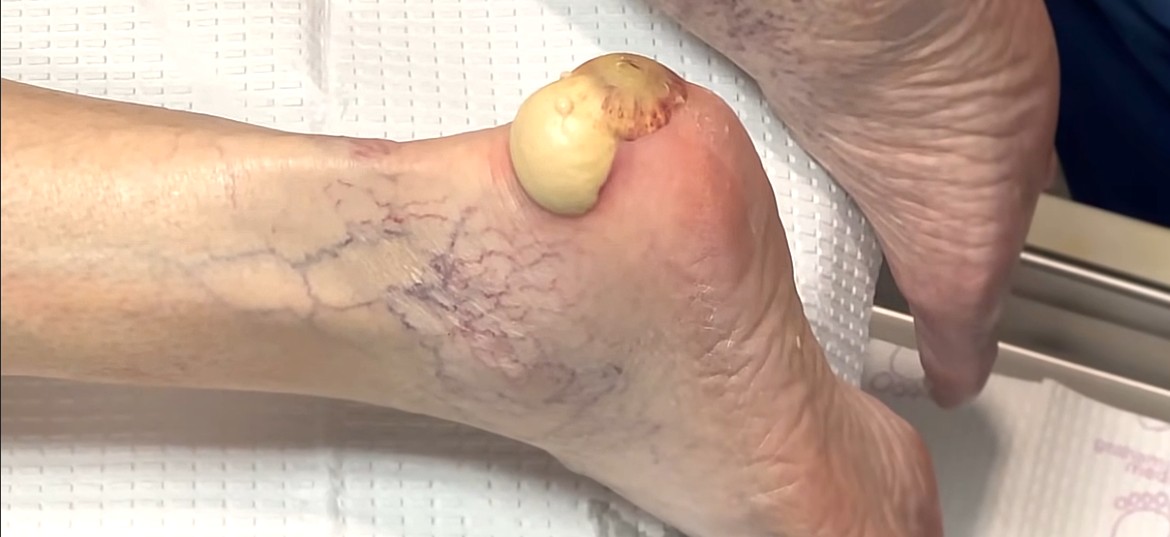
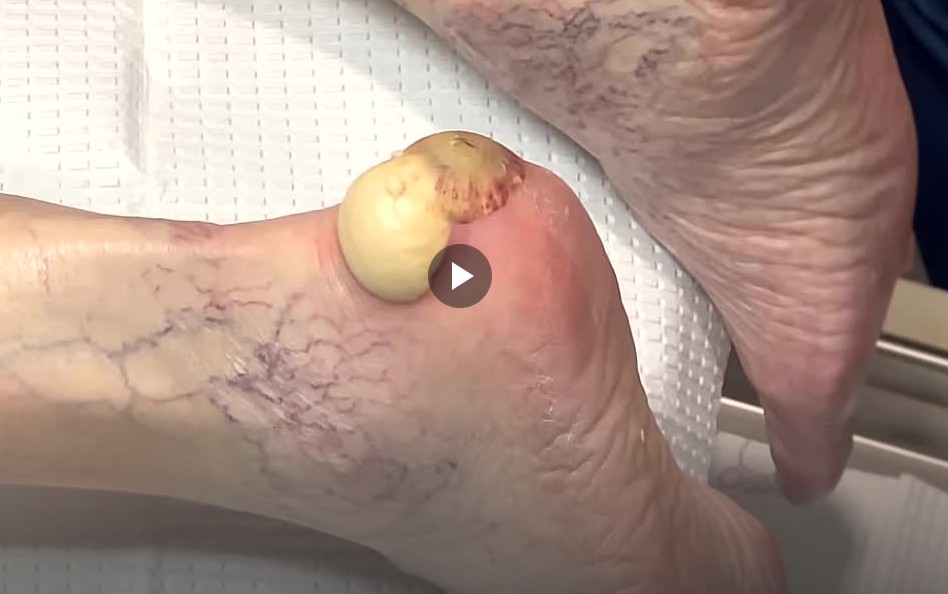
This image shows a large fluid-filled blister and swelling on the heel, an area that carries heavy body weight and constant friction. When blisters grow to this size, they are no longer simple skin injuries. They often indicate deep tissue irritation, infection, or trapped fluid beneath the skin, which can quickly worsen if left untreated.
Heel blisters like this commonly form from:
-
Prolonged pressure or poorly fitting footwear
-
Repeated friction while walking or standing
-
Weak or fragile skin due to circulation issues
-
Untreated wounds that become infected
As the blister expands, the skin stretches and becomes tense, painful, and vulnerable to rupture. In some cases, bacteria enter the wound, turning a simple blister into a dangerous abscess filled with infected fluid.
Why This Condition Should Not Be Ignored
Severe heel blisters can lead to:
-
Intense pain when walking
-
Skin breakdown and open wounds
-
Risk of deeper infection
-
Slow healing due to poor blood flow in the foot
The video associated with this image documents the professional treatment process, showing how trained specialists safely relieve pressure, clean the area, and prevent the infection from spreading.
Why You Should Watch the Video
-
See how a large heel blister is properly treated
-
Learn how foot infections develop from pressure injuries
-
Understand why home treatments can be risky
-
Discover early warning signs before blisters become serious
Many people underestimate foot injuries, especially when they appear “just like a blister.” This video reveals what is really happening under the skin and explains why medical care is essential for proper healing.
🎥 Watch the full video to see how this massive heel blister is treated and learn how to protect your feet from similar injuries.