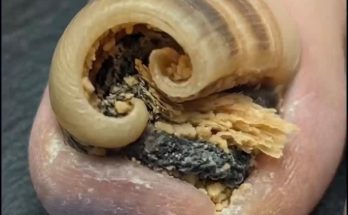
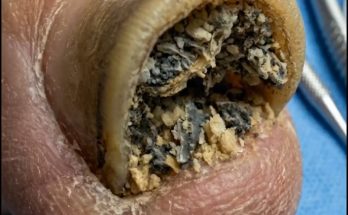
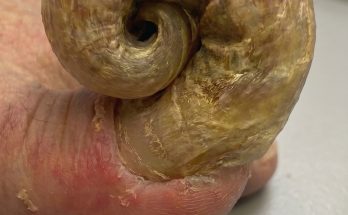
The image shows a close-up view of an inflamed toenail corner with thick yellow-white pus being drained using a sharp instrument. This appearance strongly suggests an infected ingrown toenail, a common but painful condition that happens when the nail grows into the surrounding skin. Although the process of releasing pus can bring relief, dealing with ingrown toenails—especially infected ones—requires careful attention, proper hygiene, and often professional treatment.
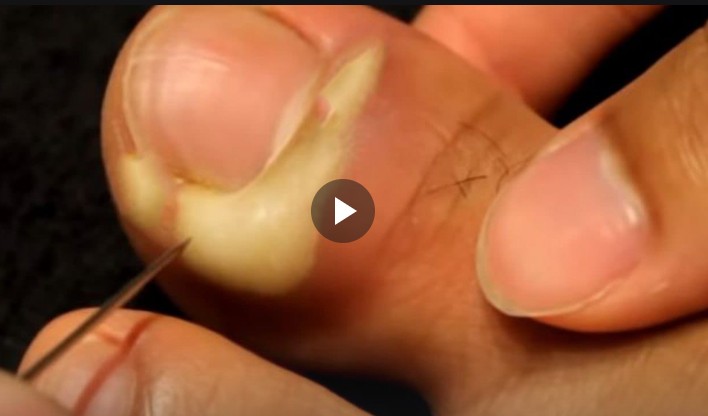
An ingrown toenail typically begins with mild redness and irritation along the nail edge. As the nail continues digging into the skin, the area becomes increasingly tender, swollen, and painful. When bacteria enter the small wound created by the nail, infection can occur. This leads to a buildup of pus, warmth, and significant discomfort. In the image, the thick yellow fluid indicates that the infection has progressed, and pressure has accumulated beneath the skin.
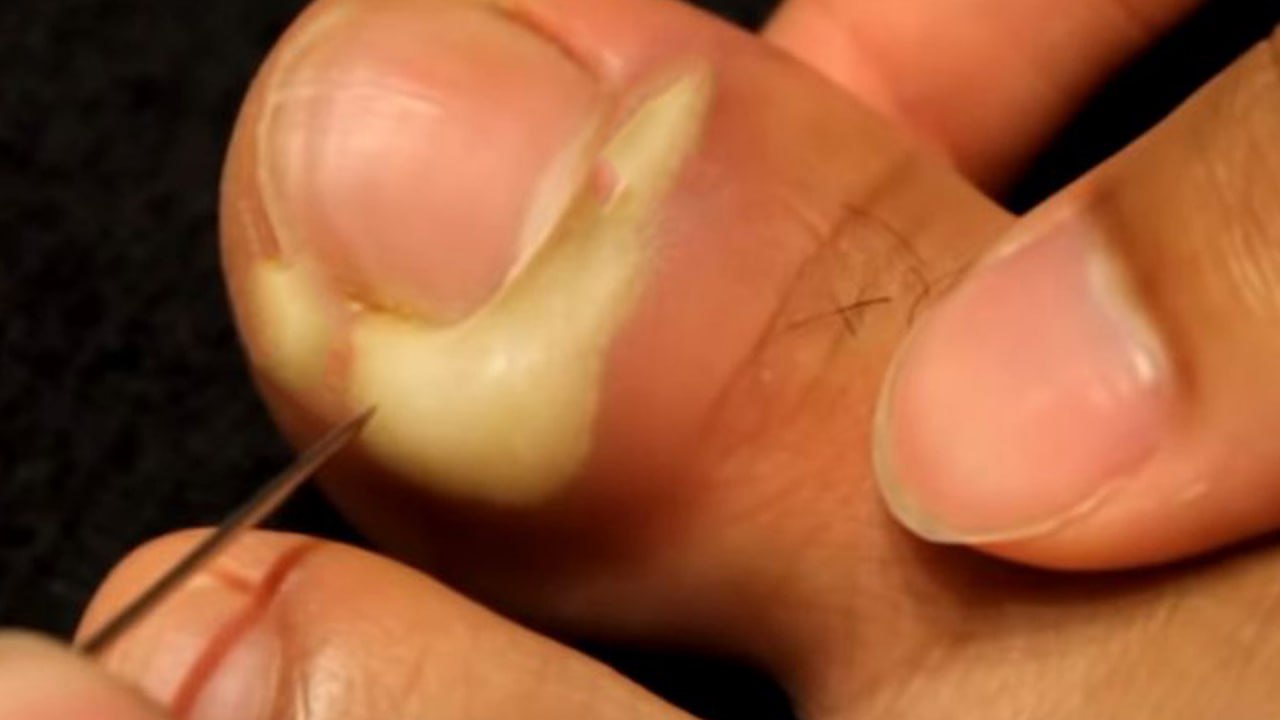
Many people attempt to drain the pus at home using needles or sharp objects, as seen in the picture. While this can temporarily relieve pressure, it also carries risks. Using non-sterile tools or damaging the skin further can worsen the infection. The infected area may spread, leading to more swelling, increased pain, or even deeper soft tissue infections. In addition, repeatedly poking or cutting the skin often fails to address the underlying problem—the nail edge that keeps growing inward.
Properly managing an infected ingrown toenail begins with identifying the cause. Tight shoes, improper nail trimming, repeated toe trauma, or naturally curved nails are common triggers. Prevention starts with cutting nails straight across, avoiding overly short trims, and choosing footwear with enough space around the toes. However, once infection has formed, simple home remedies may no longer be enough.
Warm salt water soaks can help reduce swelling and draw out some of the infection naturally. Applying an antiseptic afterward helps minimize bacterial growth. Keeping the toe clean and dry ensures that the infection does not worsen. However, if pus continues to form, the redness spreads, or walking becomes difficult, it’s time to seek medical care.
A healthcare professional can safely drain the infected area under sterile conditions. More importantly, they can lift or trim the offending part of the nail to stop it from cutting into the skin. In more severe or recurrent cases, a partial nail removal procedure may be recommended to prevent future ingrowth. This is usually done with local anesthesia and provides long-term relief.
Ignoring an infected ingrown toenail can lead to complications, especially for individuals with diabetes, poor circulation, or weaker immune systems. For these people, even a small infection can become serious.
While draining pus may seem like a simple solution, it should only be considered a temporary step. The underlying issue—the nail’s improper growth—must be addressed to prevent repeat infections. Proper nail care, good hygiene, and timely medical treatment ensure the fastest and safest recovery.
In summary, the image illustrates a common but potentially risky attempt to manage an infected ingrown toenail. Understanding the causes, recognizing the risks, and following proper care guidelines can help prevent complications and promote healthier nail growth.