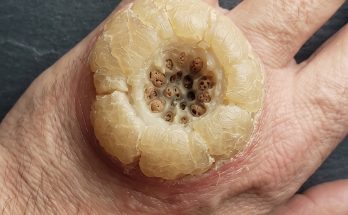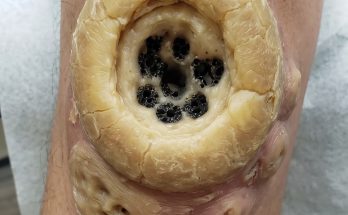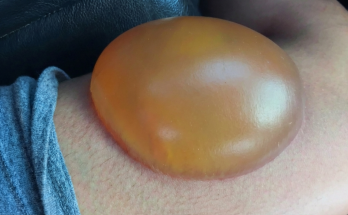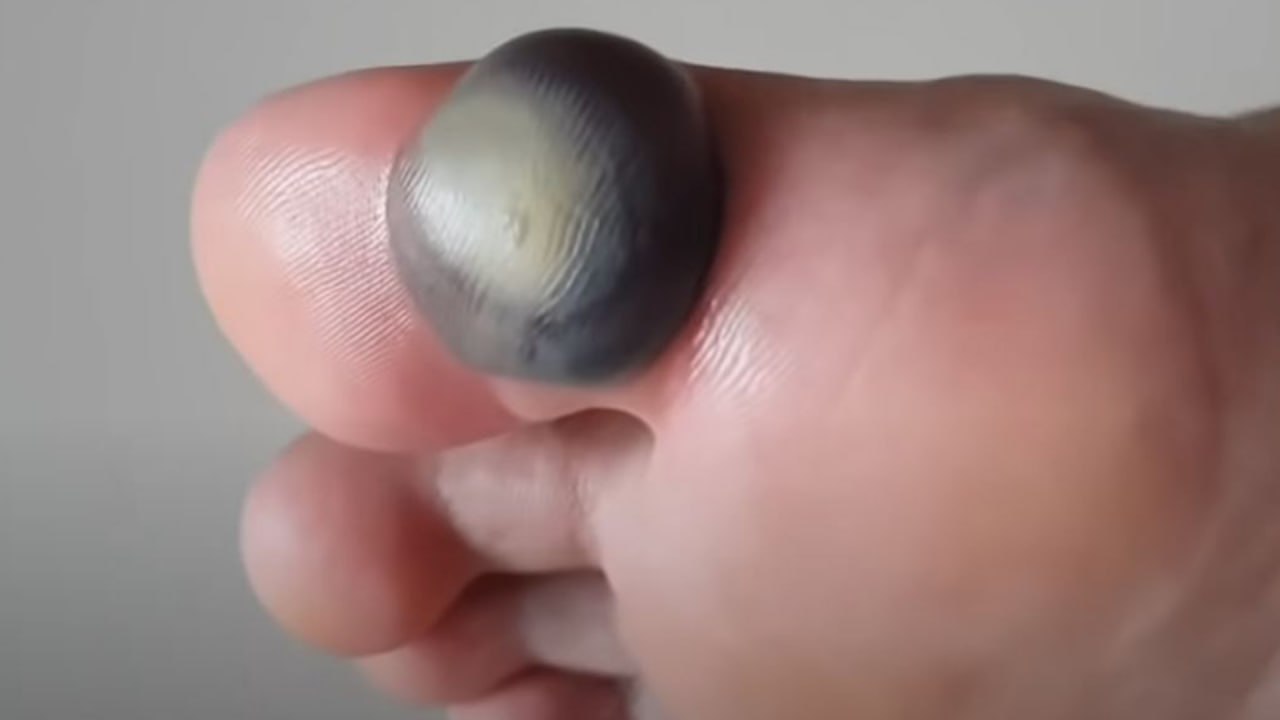
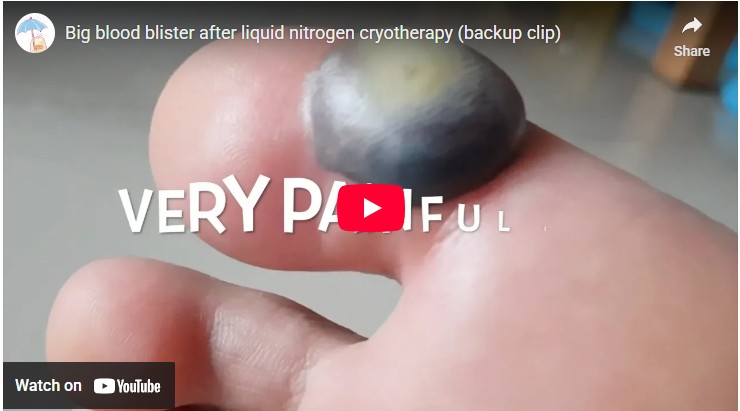
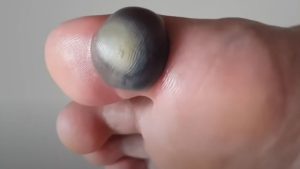
The image shows a dramatically swollen, dark-colored bulge at the tip of a toe. The raised lump appears tense, rounded, and discolored with shades of black, blue, and yellowish-white near the center. This appearance strongly suggests a large subungual or soft-tissue hematoma, which occurs when blood collects under the skin or nail after significant pressure, trauma, or repeated friction. Although such a swelling can look alarming, it usually develops from everyday injuries such as stubbing the toe, dropping an object on it, or prolonged walking or running with tight footwear.
A hematoma forms when small blood vessels rupture beneath the skin, allowing blood to pool and create pressure. As more blood accumulates in one localized area, the surface becomes firm, shiny, and visibly swollen. The dark coloration—from purplish to black—is caused by oxygen-poor blood trapped under the tissue. The slight yellowish area in the center often indicates older blood beginning to break down, a normal part of the healing process. However, the size and pressure shown in the image suggest that the hematoma may be causing significant discomfort, tenderness, and difficulty walking.
Many people attempt to puncture or squeeze hematomas at home, believing it will relieve the pressure. While drainage can indeed reduce pain temporarily, performing this procedure without sterile tools and proper technique can lead to infection or deeper tissue complications. Introducing bacteria into the wound may cause redness, heat, pus buildup, and spread of infection to surrounding structures. Additionally, puncturing the area incorrectly may worsen the bleeding or damage healthy skin.
Proper care begins with understanding the cause of the hematoma. If the swelling resulted from trauma, applying a cold compress during the first 24 hours helps limit bleeding and swelling. Keeping the foot elevated also reduces pressure buildup. For mild cases, the body will eventually reabsorb the trapped blood over days to weeks. However, when the bulge becomes large, tense, or extremely painful—like the one shown—professional evaluation is recommended. A healthcare provider can safely perform hematoma decompression, using sterile conditions to release pressure without causing further injury.
It’s also important to monitor for signs of complications. If the toe becomes numb, loses color, or shows streaks of redness moving upward, these may indicate circulatory issues or infection. Individuals with diabetes, bleeding disorders, or compromised immune systems should be especially cautious, as even minor injuries can lead to serious problems.
Preventing toe hematomas involves wearing properly fitted shoes, protecting toes from repetitive impact, and using cushioning during sports or long-distance walking. Trimming nails properly and keeping skin healthy can also reduce the risk of trauma-related complications.
In conclusion, the image illustrates a severe toe hematoma that likely resulted from trapped blood beneath the skin or nail. While often not dangerous, its size and tension suggest that medical treatment may be needed to relieve pressure and prevent further issues. Understanding the causes, treatment options, and warning signs helps ensure safe recovery and protects foot health in the future.