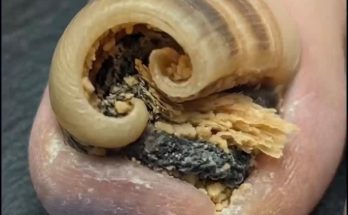
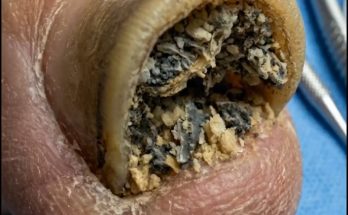
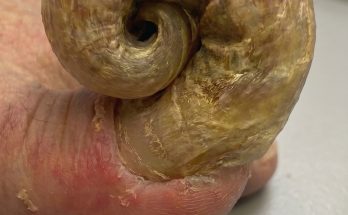
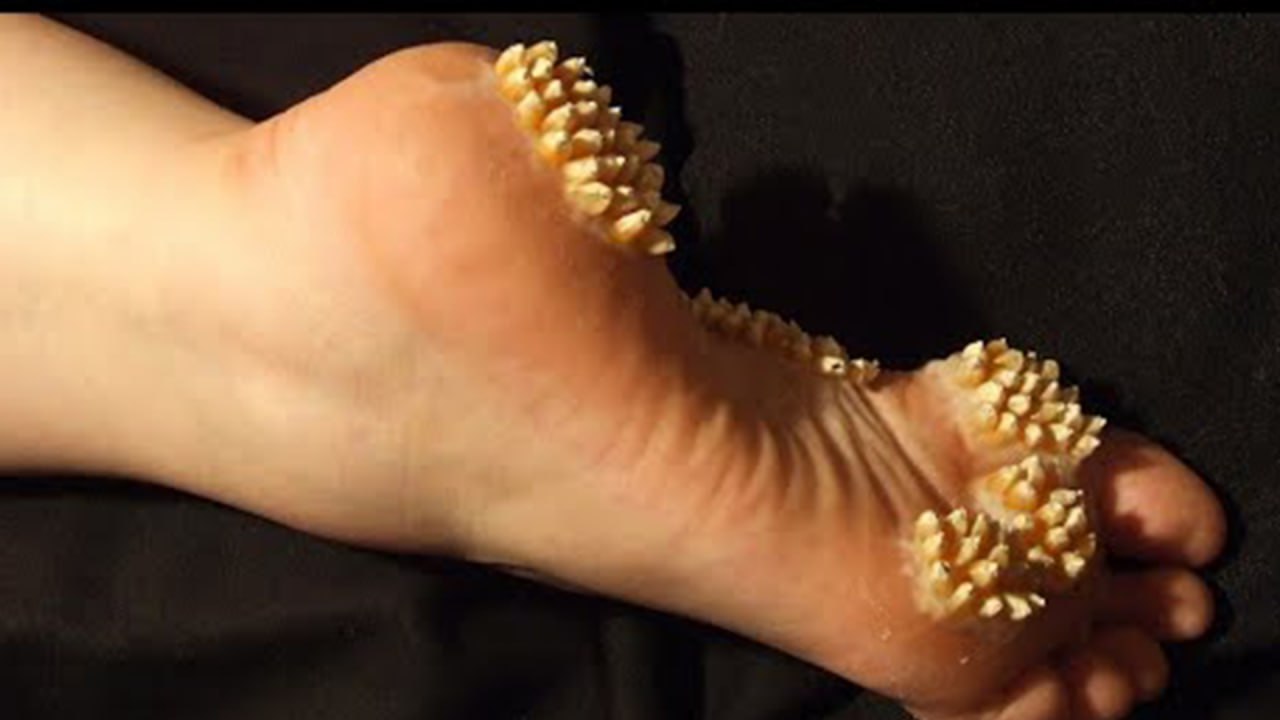
The image shows an extremely unusual and dramatic growth pattern on the bottom of a foot. The clusters of horn-like projections appear to be made of hardened keratin, the same material found in nails and skin. Although this image looks shocking, it represents a type of rare skin condition that can happen when keratin accumulates abnormally, forming thick, hard structures similar to “cutaneous horns.” In reality, such extreme presentations are rare, but they highlight how the skin can react when exposed to chronic irritation, viral infections, or untreated lesions.
Cutaneous horn–type growths develop from excessive buildup of keratin, usually triggered by underlying causes such as persistent inflammation, viral warts, or long-term pressure on specific areas. When the skin receives repeated friction or injury, it responds by producing more keratin to protect itself. Over time, this can create thickened patches, and in very unusual cases, spikes or horn-like structures may appear. The foot, which carries the body’s weight and experiences constant pressure, is especially vulnerable if the skin is not cared for properly.
One common cause of wart-like keratin growth is the human papillomavirus (HPV). Plantar warts, for example, can multiply and form clusters. In severe chronic cases, they may appear raised or even spike-like. Another possible cause is a condition known as “epidermodysplasia verruciformis,” a genetic disorder that makes the body unusually sensitive to wart-causing viruses, leading to excessive keratin formations. While this condition is extremely rare, it demonstrates how dramatically keratin can grow when the skin’s protective mechanisms malfunction.
Without treatment, keratin overgrowth can spread, become painful, or cause difficulty walking. The pressure on the foot intensifies as the structures grow thicker and longer, leading to cracked skin, infections, and inflammation. People may experience burning sensations or discomfort when standing for long periods. The appearance of these growths also increases the risk of bacterial or fungal infection because the rough surfaces can trap sweat and dirt.
Treatment depends on the underlying cause and severity. A dermatologist may begin by examining the growths and removing some keratin buildup to relieve pressure. In most cases, specialized tools or minor procedures are used to shave down or trim the hardened layers. If the growths are caused by viral warts, topical treatments, cryotherapy (freezing), or laser therapy may be necessary. In more complex cases, biopsy samples may be taken to rule out other conditions and to confirm the diagnosis.
Prevention is important, especially for people who often walk barefoot or have chronic foot irritation. Wearing proper footwear, keeping the feet clean and dry, and treating calluses early can help prevent buildup. For individuals who notice unusual thickening of the skin or wart-like lesions, early medical evaluation is key. Long-term neglect can lead to severe and dramatic keratin growth, as shown in the image.
In conclusion, the unusual foot in the picture showcases an extreme form of keratin buildup that may result from warts, chronic irritation, or rare genetic conditions. While shocking, such cases highlight the importance of foot hygiene, early treatment, and professional care to prevent complications and maintain healthy skin.