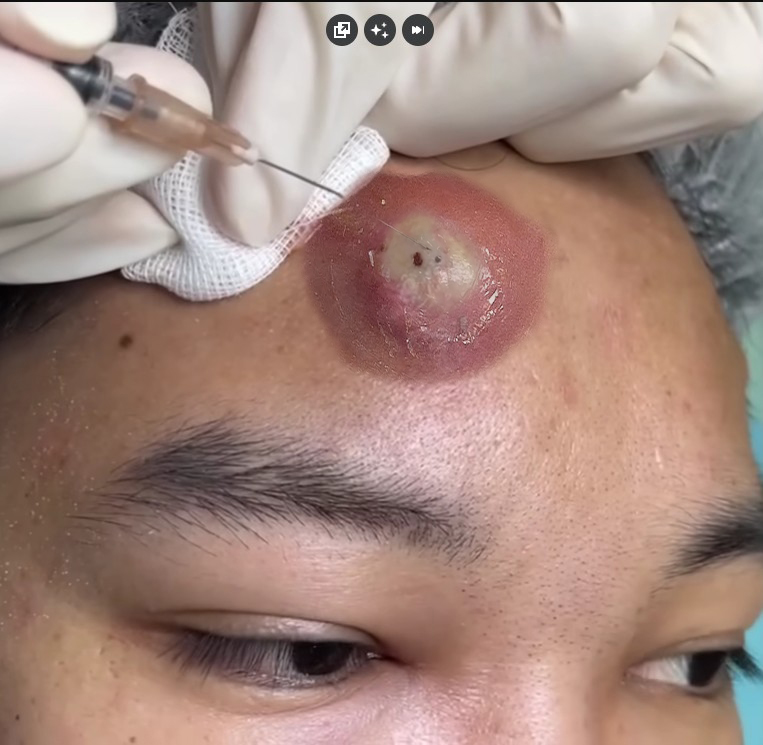
A forehead abscess is a painful, swollen lump that develops under the skin when bacteria infect hair follicles, oil glands, or deeper tissues. It often starts as a small red bump that grows larger, becomes warm to the touch, and fills with pus. When an abscess forms on the forehead, it can be especially uncomfortable due to the skin’s tightness and sensitivity in that area. In some cases, medical drainage is necessary to remove the pus and promote healing. This article explains what a forehead abscess is, why it occurs, and how the drainage procedure is safely performed.
1. Understanding a Forehead Abscess
An abscess is the body’s way of fighting infection. When bacteria invade the skin, the immune system responds by sending white blood cells to the affected area. These cells collect in the tissue, creating a buildup of pus — a mixture of dead cells, bacteria, and debris. This accumulation causes swelling, redness, and pain. On the forehead, abscesses are often caused by:
- Infected pimples or cysts
- Ingrown hairs
- Minor skin injuries or insect bites
- Poor hygiene or clogged pores
- Underlying skin conditions such as acne or folliculitis
If left untreated, an abscess can grow larger and lead to complications, such as spreading infection or scarring.
2. Signs You May Need Drainage
Not all abscesses require medical drainage. Small ones may heal with warm compresses and antibiotics. However, if the abscess becomes very swollen, filled with pus, or extremely painful, drainage is often necessary. Signs that indicate you may need professional treatment include:
- Increasing redness and swelling
- A soft or fluctuant area in the center of the lump
- Severe pain or throbbing
- Fever or fatigue (signs the infection is spreading)
- No improvement after several days of home care
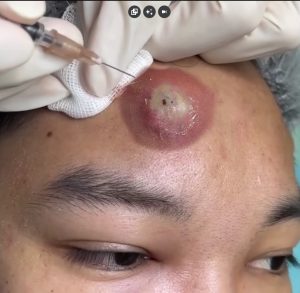
3. The Abscess Drainage Procedure
A forehead abscess drainage procedure is typically done in a clinic or doctor’s office under sterile conditions. Here’s how it is performed:
- Cleaning and Numbing the Area: The doctor cleans the forehead with an antiseptic and injects a local anesthetic to numb the area, ensuring minimal discomfort.
- Making an Incision: A small cut is made over the abscess to allow the pus to drain out. In some cases, a needle may be used for initial aspiration.
- Draining the Pus: The doctor gently presses or uses sterile tools to remove all the pus and debris. This helps relieve pressure and pain immediately.
- Flushing the Cavity: The wound may be rinsed with saline to ensure all infection material is cleared.
- Packing and Dressing: A small piece of sterile gauze might be placed inside the cavity to absorb remaining fluids. The area is then covered with a clean dressing.
4. Aftercare and Healing
After drainage, keeping the wound clean is crucial for recovery. Patients are often advised to:
- Wash the area gently with mild soap and water.
- Replace the bandage daily or as directed by the doctor.
- Take prescribed antibiotics to prevent reinfection.
- Avoid touching or squeezing the healing site.
- Apply warm compresses to promote circulation and drainage.
Most forehead abscesses heal within one to two weeks, though some may take longer depending on the size and depth of the infection.
5. Prevention Tips
To prevent forehead abscesses in the future:
- Keep your skin clean and free from excess oil.
- Avoid picking or squeezing pimples.
- Use antibacterial cleansers if prone to acne or infections.
- Treat small skin injuries promptly to prevent bacterial entry.
Conclusion
A forehead abscess drainage procedure is a safe and effective treatment that provides relief from pain and infection. By properly cleaning, draining, and caring for the wound, patients can ensure faster healing and minimal scarring. Seeking timely medical attention is key to preventing complications and maintaining healthy skin.