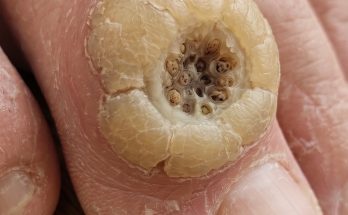
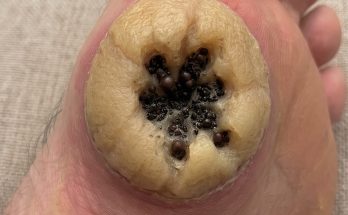
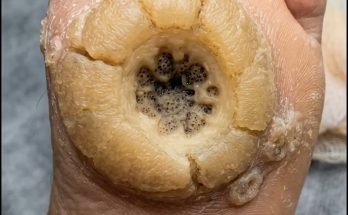
This video presents a close-up look at the removal of a thick, hardened, callus-like layer of skin from the back of a hand. At the beginning of the clip, the affected area appears large, circular, dry, cracked, and yellowish, with a rough surface surrounding a darker central section. The texture is noticeably different from the nearby healthy skin, creating a dramatic contrast that immediately draws attention.
The process begins with a small cutting and trimming tool being carefully placed along the outer edge of the hardened skin. Rather than making deep cuts, the tool is used to shave and lift the thick surface little by little. Small pieces of dry material separate from the hand as the trimming continues. The slow and controlled movements make the transformation easy to follow and create a satisfying visual effect for viewers who enjoy detailed skin-care and removal videos.
As more of the hardened layer is removed, a lighter and smoother area underneath becomes visible. The tool continues working around the circular lesion, gradually separating larger sections of the thick outer layer. One of the most noticeable moments occurs near the end, when a large remaining piece is lifted away and the surface underneath appears pink, smooth, and much flatter than before. The final result shows a clear visual difference between the heavily thickened skin seen at the start and the cleaner-looking surface revealed after trimming.
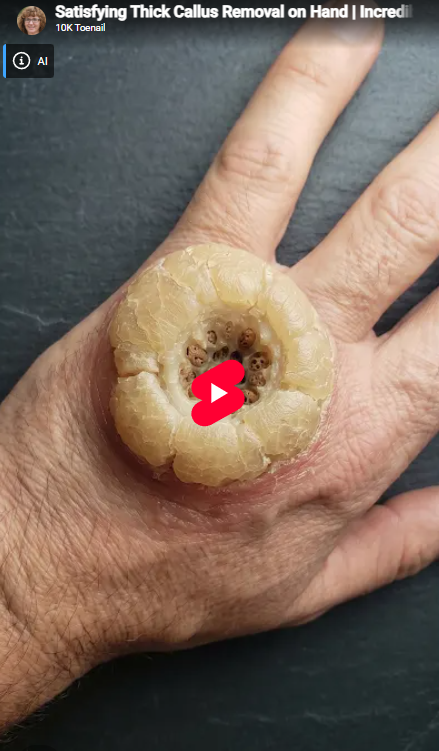
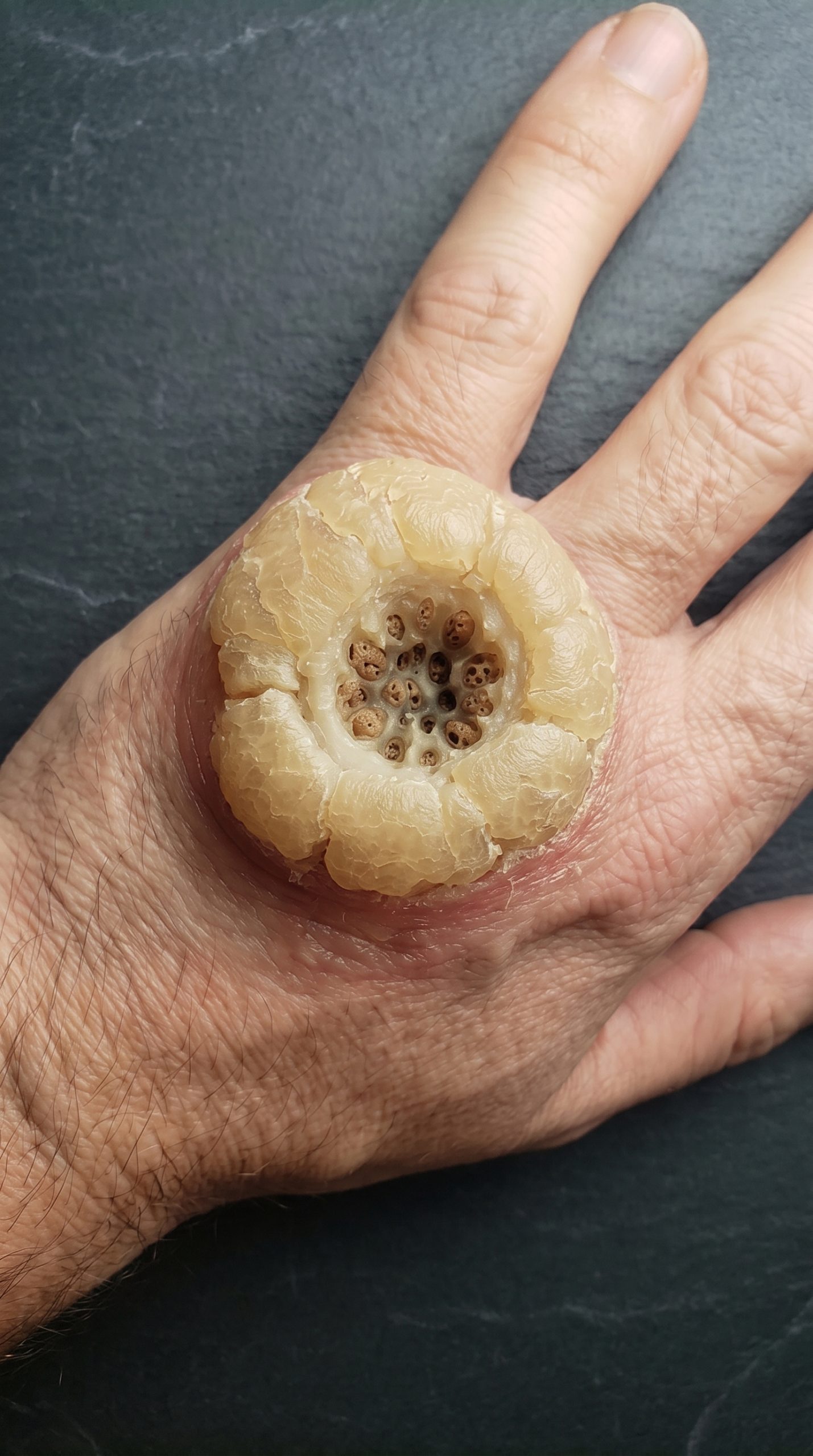
Although the video is visually satisfying, unusual areas of thickened skin can have different causes. A callus commonly develops after repeated pressure or friction, but growths with dark dots, bleeding, pain, rapid enlargement, or repeated recurrence may need professional evaluation. Appearance alone cannot confirm exactly what a skin lesion is.
Anyone with a similar area should avoid cutting deeply or attempting aggressive removal with sharp tools at home. This can injure healthy tissue and may lead to bleeding, infection, scarring, or delayed healing. Clean equipment and proper skin care are important, and persistent or unusual lesions should be examined by a qualified healthcare professional.
The close framing also makes each change in texture visible, from the dry outer layer to the smoother surface revealed underneath clearly.
Overall, the video offers a dramatic before-and-after transformation through a slow, close-up trimming process. The steady camera, detailed view, and gradual removal of the hardened layer make the clip especially engaging for audiences who enjoy satisfying skin-care, callus-removal, and ASMR-style visual content.