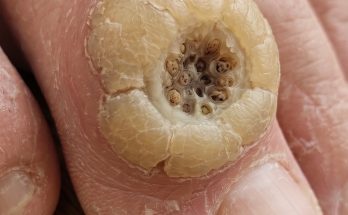
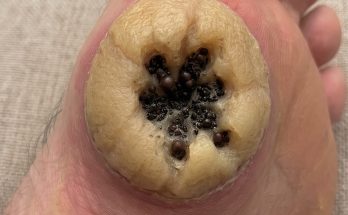
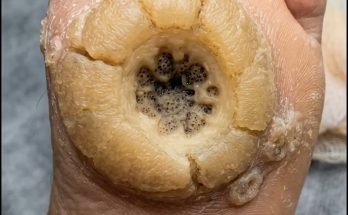
This close-up video shows a careful skin-cleaning and trimming process on a very thick, hardened area of skin around the knee. At the beginning, the affected area appears raised, dry, cracked, and heavily layered, with a circular ring of yellowish thickened skin surrounding a softer central section. Several dark, pinpoint-looking areas can also be seen in the center. The surrounding skin appears mildly irritated, making the contrast between normal skin and the hardened surface very noticeable.
As the video continues, a small trimming tool is used slowly and gently along the outer edge of the thickened skin. The goal of the process shown is to remove only the loose, hardened outer layer rather than cutting deeply into the skin. The blade moves around the circular surface in a controlled way, gradually separating a large piece of dry, callused-looking tissue. Once the thick outer section is lifted, the area underneath looks smoother and more even, while the central portion remains visible.
The most satisfying part of the video is the moment when a large section of the hardened layer comes away in one piece. Because the camera stays close to the skin, viewers can clearly see the difference in texture before and after the trimming. The dry, rough surface changes into a flatter and cleaner-looking area, creating a strong visual transformation.
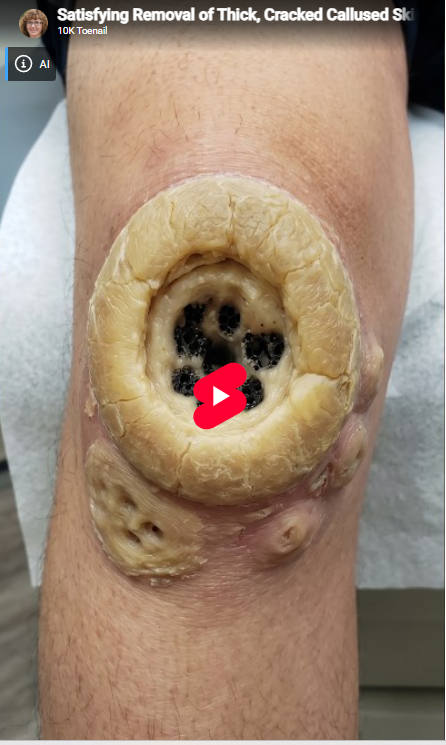
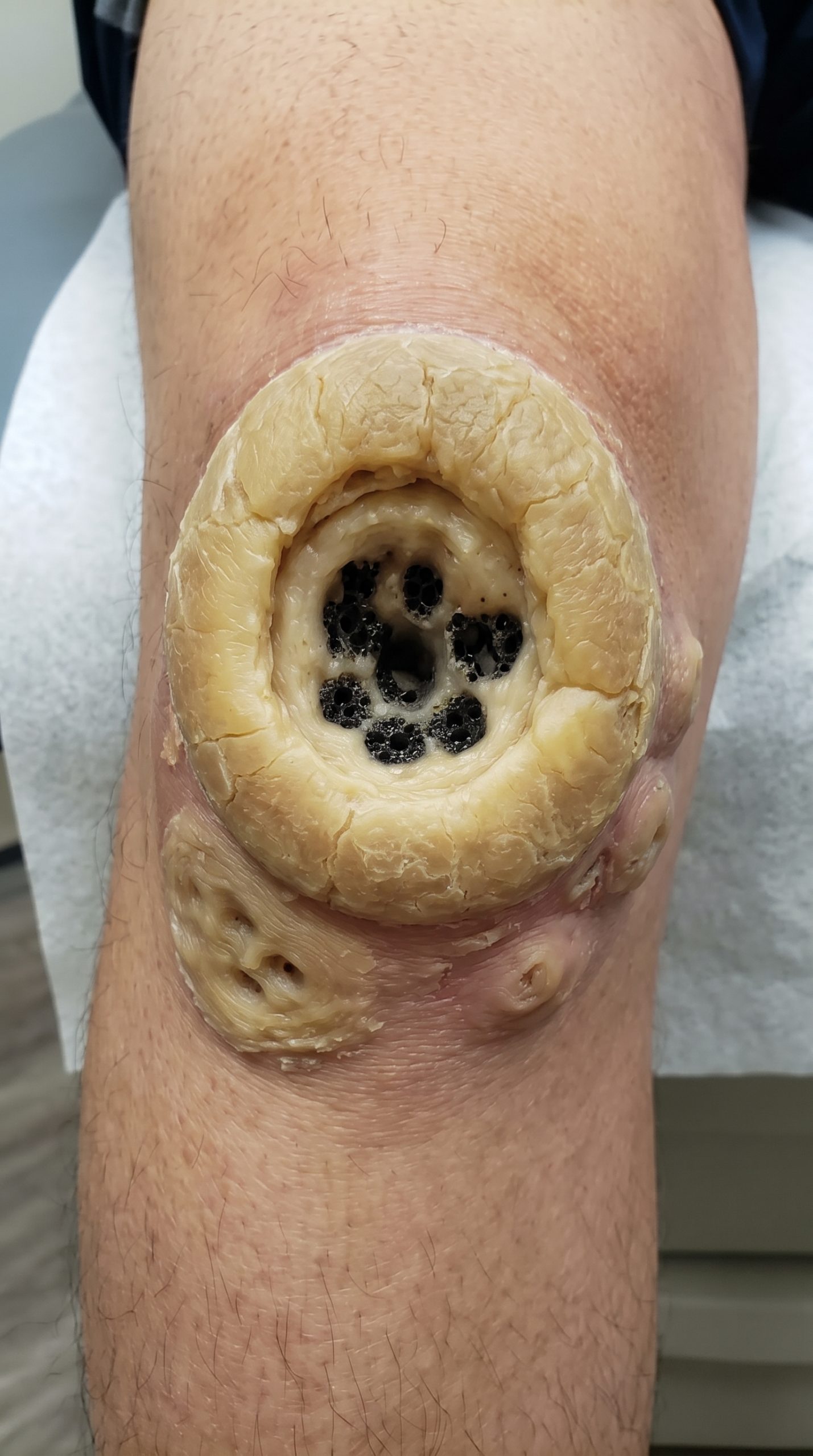
Although the process may look simple, thickened or unusual skin growths can have many different causes. Dark dots, pain, bleeding, rapid growth, redness, swelling, or repeated recurrence may require assessment by a qualified healthcare professional. It is also important not to cut deeply, dig into the center, or use unsterilized tools, because doing so may cause bleeding, infection, or damage to healthy skin.
For viewers who enjoy detailed skin-care, callus-trimming, or satisfying close-up videos, this clip offers a clear look at the gradual removal of a heavily thickened outer layer. The steady camera, slow tool movement, and visible before-and-after change make the process easy to follow. Proper hygiene, clean instruments, gentle technique, and professional evaluation when needed are always important when dealing with thick, cracked, or unusual areas of skin.
From an educational perspective, the video also highlights how much hardened material can build up when skin experiences repeated pressure, friction, irritation, or another underlying condition. However, appearance alone cannot confirm the exact cause. Any persistent lesion should be checked before repeated trimming or home treatment is attempted over time.