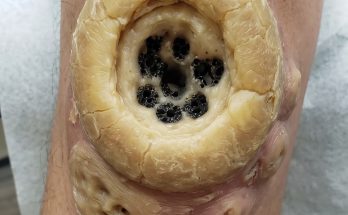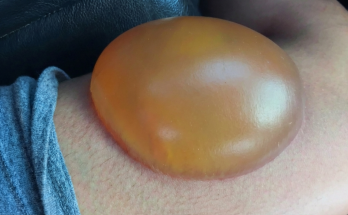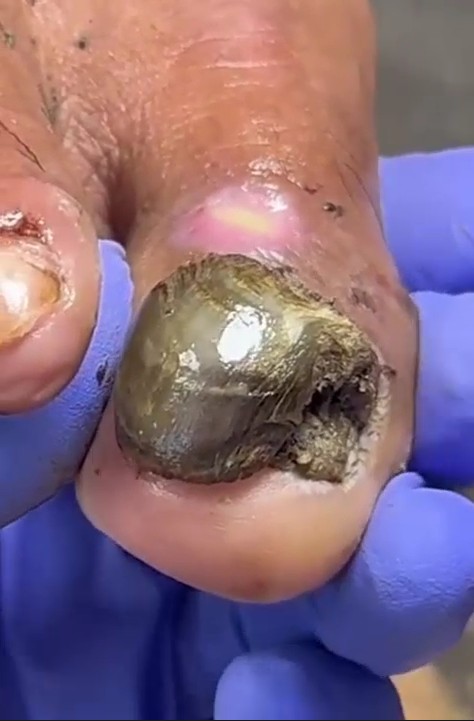
The image above shows a severely diseased toenail with thick discoloration, swelling, and visible tissue damage. This type of condition is often caused by a combination of fungal infection, bacterial growth, and poor blood circulation. When left untreated, it can lead to painful complications and permanent nail loss.
How Toenail Infections Become Severe
Toenail infections usually begin slowly. A small crack, fungal infection, or minor injury can allow microorganisms to enter the nail bed. Over time, bacteria and fungi multiply beneath the nail, causing it to thicken, change color, and lift away from the skin. Moist environments, tight footwear, and poor foot hygiene make this process worse.
People with diabetes or weak immune systems are at higher risk, as their bodies have difficulty fighting infections and healing damaged tissue.
Common Symptoms to Watch For
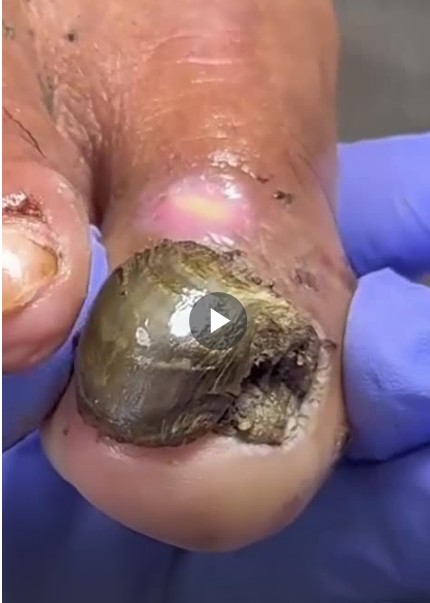
Early symptoms include nail discoloration, yellow or green staining, and slight tenderness. As the infection worsens, the nail becomes hard, brittle, and misshapen. Swelling and redness around the toe often develop, and pus or fluid may appear under the nail.
In advanced stages, the nail may turn dark or black, which can indicate dead tissue or a serious blood flow problem. This requires urgent medical care.
Medical Treatment and Recovery
Severe toenail disease should always be treated by a healthcare professional. Treatment may include removing the damaged nail, cleaning infected tissue, and prescribing antifungal or antibiotic medications. In some cases, ongoing foot care and special dressings are needed to support healing.
Ignoring this condition can lead to deeper infections, bone involvement, and long-term mobility problems.
Preventing Future Nail Problems
Good foot hygiene is the best defense. Wash and dry your feet daily, trim nails properly, and wear breathable shoes. Avoid walking barefoot in public areas, and keep your nail tools clean. Regular foot checks are especially important for people with diabetes.
Conclusion
A badly damaged toenail is more than a cosmetic issue—it is a warning sign of serious infection. Early treatment and proper care can protect your feet and prevent lasting damage.