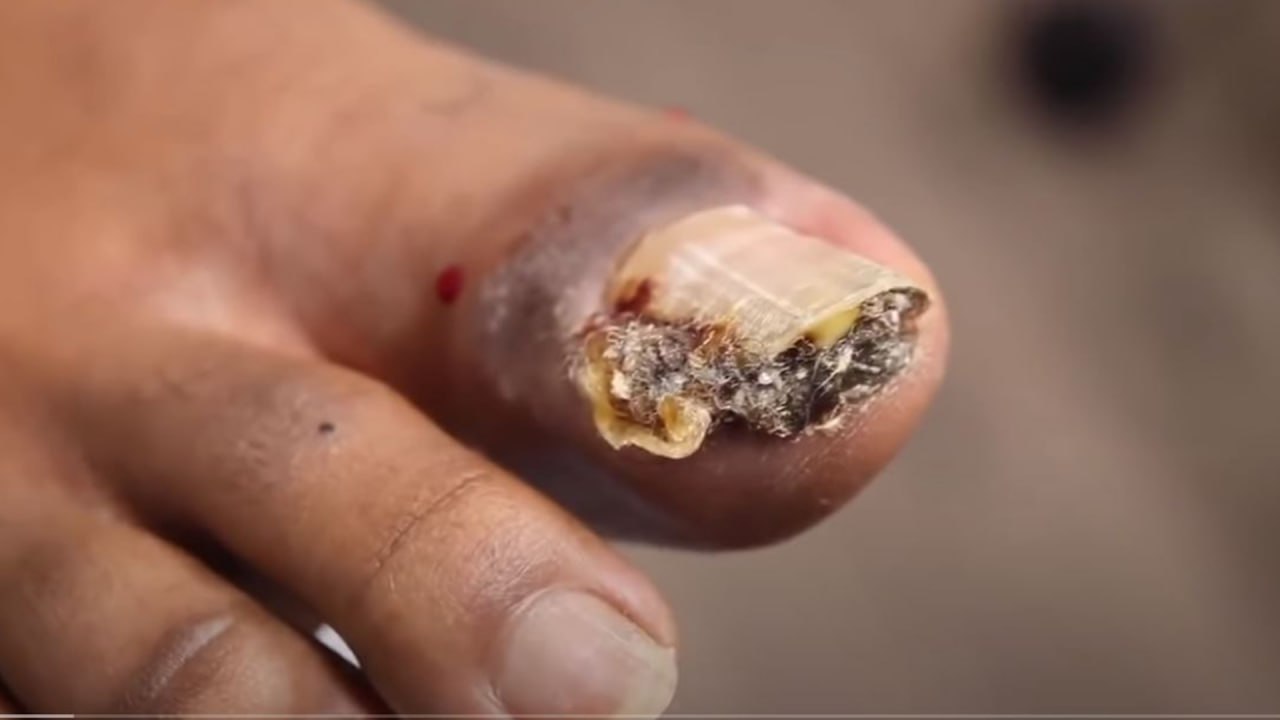
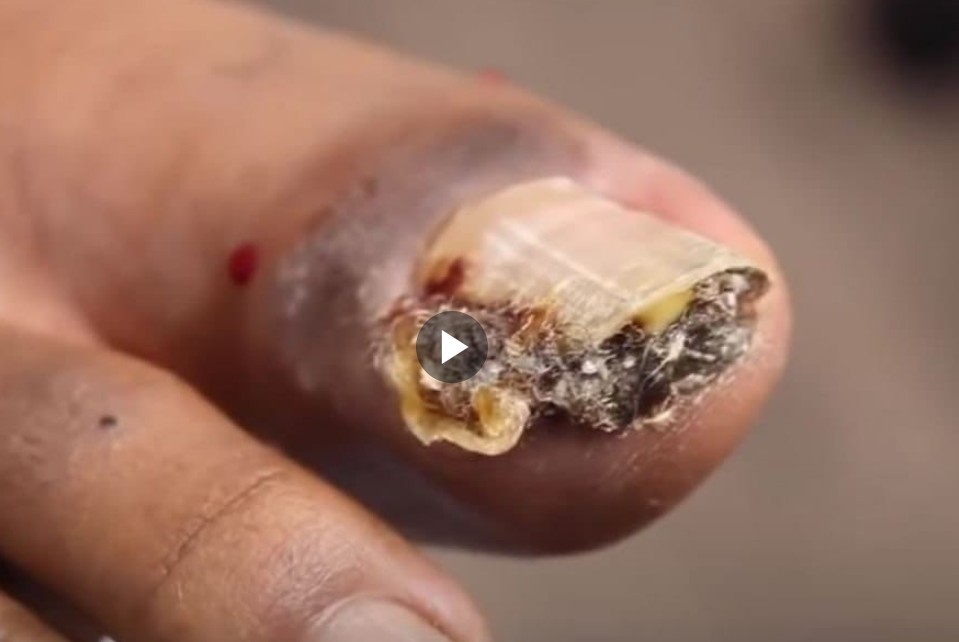
A severely damaged toenail, like the one shown in the image above, is often a sign of a serious underlying infection. The darkened tissue, thick crust, and broken nail indicate that bacteria or fungi have deeply affected the nail bed. This condition can be painful, difficult to treat, and dangerous if left unmanaged.
What Leads to Toenail Destruction?
Toenail damage usually begins with a small injury, fungal infection, or an untreated ingrown nail. Over time, bacteria enter the nail bed, feeding on weakened tissue and multiplying rapidly. Poor foot hygiene, wearing tight or dirty shoes, walking barefoot in contaminated areas, and chronic moisture around the toes increase the risk of infection.
People with diabetes, nerve damage, or circulation problems are especially vulnerable, as their feet heal more slowly and infections spread more easily.
Warning Signs of a Dangerous Toenail Infection
Early symptoms include nail discoloration, thickening, and mild pain. As the infection progresses, the nail may crumble, detach, or develop dark, foul-smelling areas. Swelling, redness, bleeding, and pus are signs that the infection has become severe.
In advanced stages, the surrounding skin may turn black or gray, which can indicate dead tissue. This is a medical emergency that should be treated immediately.
Professional Treatment Is Necessary
Severe toenail infections cannot be cured with home remedies. A podiatrist or medical professional must remove infected tissue, clean the nail bed, and possibly prescribe antibiotics or antifungal medications. In some cases, part or all of the nail must be removed to allow healthy tissue to regrow.
Delaying treatment can result in bone infection, permanent nail loss, or even amputation in extreme cases.
How to Protect Your Toenails
Preventing severe nail infections starts with proper foot care. Keep your feet clean and dry, trim nails straight across, and avoid sharing nail tools. Wear well-fitting shoes and change socks daily. If you notice any color changes, pain, or swelling, seek medical advice early.
Final Thoughts
A badly damaged and infected toenail is not just a cosmetic issue—it is a serious health concern. Early medical treatment and good foot hygiene are the best ways to protect your feet and prevent long-term complications.