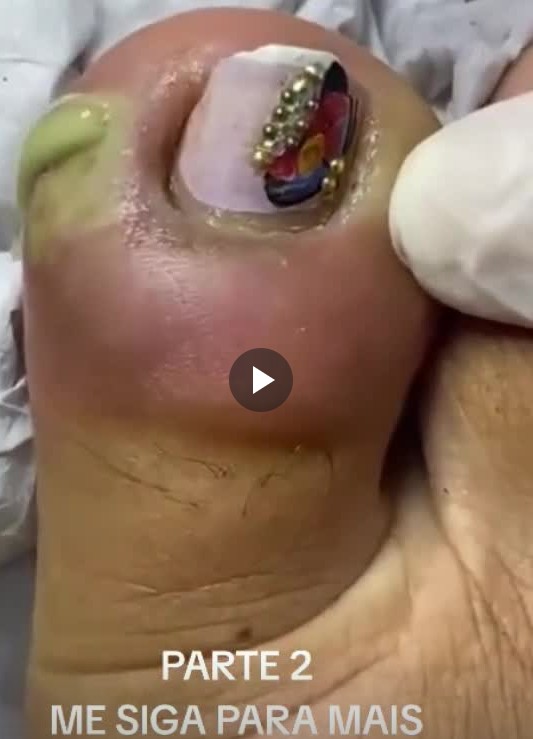
An infected ingrown toenail is a painful and potentially serious foot condition that can worsen quickly if left untreated. The image shows a swollen big toe with visible pus around the nail edge, even while a decorative nail enhancement is present. This situation highlights an important reality: cosmetic nail treatments do not protect against medical nail problems and may sometimes increase the risk when proper care is not followed.
An ingrown toenail occurs when the edge of the nail grows into the surrounding skin. This can happen due to improper nail trimming, pressure from tight footwear, trauma to the toe, or repeated stress. When bacteria enter the broken skin, infection develops, leading to redness, swelling, tenderness, and pus formation. In this stage, home remedies are often no longer sufficient.
Nail enhancements such as gel polish, acrylics, or nail art can sometimes mask early warning signs of infection. Swelling and discoloration may go unnoticed until pain and pus appear. In addition, improper application or prolonged moisture under artificial nails can create an environment where bacteria thrive, increasing the risk of infection around the nail fold.
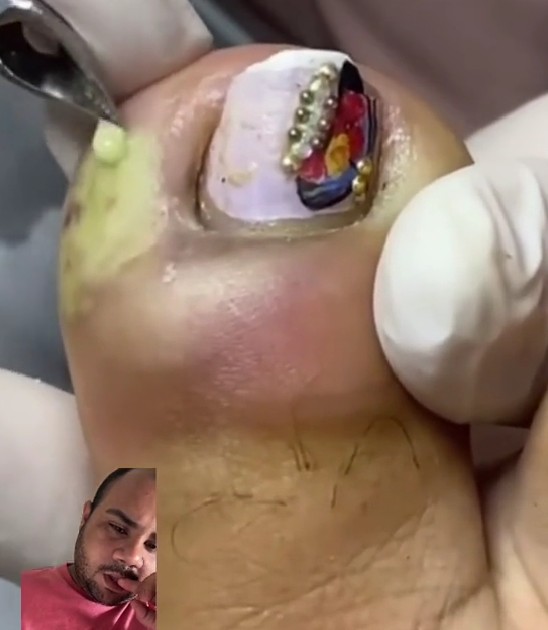
Professional ingrown toenail treatment is essential when pus is present. A trained specialist can safely remove the ingrown portion of the nail, drain the infection, and thoroughly clean the affected area using sterile techniques. This procedure provides immediate pain relief and helps prevent complications such as abscess formation or the spread of infection to deeper tissues.
After treatment, proper aftercare is critical for healing. Patients are usually advised to keep the toe clean and dry, apply prescribed antiseptics, and avoid tight shoes. Temporary removal of nail enhancements is often recommended to allow the skin to heal fully and to monitor recovery. In some cases, antibiotics may be prescribed if the infection is severe.
Preventing ingrown toenail infections starts with good foot hygiene and nail care habits. Toenails should be trimmed straight across, not too short, and without rounding the corners. Footwear should provide adequate toe space, and any pain, redness, or swelling around the nail should be addressed early. If cosmetic nail services are used, it is important to choose trained professionals who follow strict hygiene standards.
Early intervention can prevent pain, scarring, and repeat infections, protecting both foot health and overall well-being.