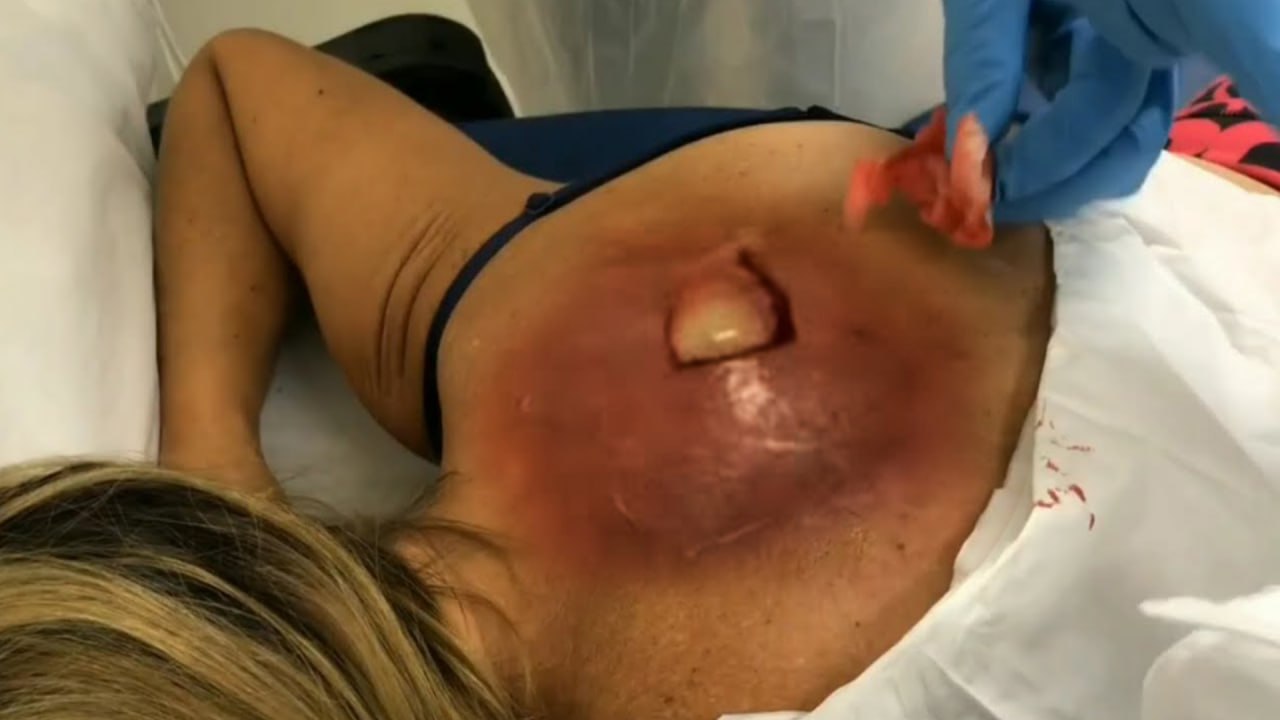
The image shows a woman lying on a medical bed while a healthcare professional is treating a large, inflamed abscess on her chest. The swollen area is intensely red, stretched, and shiny, indicating significant inflammation and pressure beneath the skin. At the center of the abscess, an incision has already been made, revealing thick, pale-yellow infected material that is being drained. This appearance is characteristic of a severe infected abscess, a condition caused by bacteria trapped beneath the skin, leading to pus buildup, pain, and swelling.
Abscesses of this size typically begin as small infections—perhaps from a clogged pore, an ingrown hair, or minor skin injury—but become much more serious when bacteria multiply rapidly in a closed space. The immune system responds by sending white blood cells to fight the infection, and as they accumulate with bacteria and dead skin tissue, pus forms. Once the pus becomes trapped, pressure builds, causing the skin to stretch and become increasingly painful. Without treatment, the infection can spread deeper or even enter the bloodstream, making medical intervention critical.
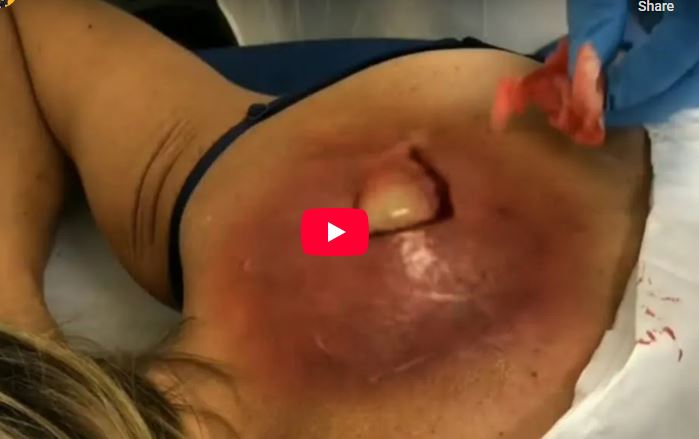
In the image, the abscess has reached a severe stage. The surrounding redness indicates a widespread inflammatory response, possibly extending several inches beyond the incision site. The dome-like swelling suggests that the pus has accumulated for days or weeks, creating significant internal pressure. At this stage, antibiotics alone are not enough. Proper incision and drainage (I&D)—performed by a trained professional—is the safest and most effective treatment.
During I&D, the provider uses sterile tools to open the abscess and allow the pus to escape. This instantly reduces pain and prevents further tissue damage. Sterile gauze may be used to absorb fluids, and the cavity may be gently cleaned or packed to prevent premature skin closure. The professional wearing medical gloves in the image indicates that the procedure is being done under safe, sterile conditions, reducing the risk of complications.
After drainage, patients typically experience relief, but aftercare is essential. The wound must be kept clean, covered, and monitored for signs of recurring infection. In some cases, antibiotics are prescribed if surrounding tissue involvement is severe or if the patient has other health risks such as diabetes or weakened immunity.
Preventing abscesses involves good hygiene, avoiding squeezing or picking at inflamed skin, and treating minor infections early before they worsen. If a lump becomes increasingly painful, warm to the touch, or filled with pus—as seen in the image—seeking medical evaluation promptly can prevent complications.
In conclusion, the image depicts a major chest abscess being properly drained in a clinical setting. This condition highlights the importance of timely medical care, sterile technique, and proper aftercare. Severe abscesses are painful and potentially dangerous, but with correct treatment, most patients heal well and regain comfort quickly.