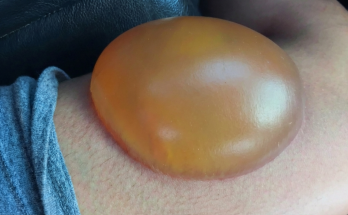
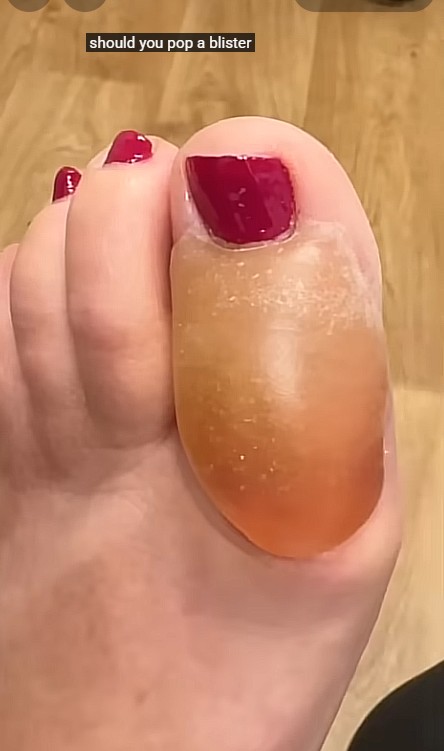
The image shows a very large blister forming on the big toe, filled with a yellow-orange fluid. Blisters like this often occur due to friction, burns, or prolonged pressure, and they can become painful or risky if not treated carefully. Even though it may be tempting to pop a blister of this size, especially when it causes discomfort, proper care is extremely important to avoid infection and long-term skin damage.
A blister forms when layers of the skin separate and fluid collects in the space between them. This fluid—usually clear or slightly yellow—acts as a cushion that protects the deeper layers of skin while healing begins. In this case, the blister on the toe appears tense, stretched, and full, suggesting significant irritation, possibly from tight footwear, long walking, or repetitive friction. People who wear closed shoes for many hours, especially those that do not fit well, are more prone to this kind of blister.
Despite its dramatic appearance, a large blister is the body’s natural protective mechanism. The outer skin covering the blister, often called the “roof,” serves as a sterile shield. As long as it remains intact, bacteria have a much harder time entering the wound. This is why medical professionals generally advise against popping blisters at home. When a blister is intentionally punctured or torn open without sterile tools and proper care, it becomes vulnerable to infection. Signs of infection include increasing redness, pus, swelling, warmth, or foul odor—symptoms that require medical attention.
However, large blisters on the toe can interfere with walking, wearing shoes, or daily activities. If the blister becomes too painful or feels like it may burst on its own, it is much safer to let a healthcare professional drain it using sterile techniques. This controlled draining allows the pressure to be released without fully removing the protective skin layer. It also greatly reduces the risk of infection. Self-draining at home with needles or blades is strongly discouraged because it can introduce harmful bacteria into the wound.
While waiting for the blister to heal, proper foot care is crucial. Keeping the blister area clean and dry helps prevent complications. Wearing soft, open footwear or shoes with enough space around the toes can prevent friction from worsening the injury. Applying a non-stick bandage or blister-specific dressing provides cushioning and protection, especially during movement. Avoid peeling or cutting the overlying skin, even if it looks loose—this layer helps the wound remain sterile and will gradually flatten as new skin grows underneath.
If the blister was caused by friction from shoes, it’s worth evaluating your footwear. Shoes that are too tight, too loose, or made from non-breathable materials can easily cause rubbing and irritation. Taking preventive steps, such as wearing moisture-wicking socks, using blister pads, or choosing properly fitted footwear, can reduce the chance of developing severe blisters in the future.
In summary, although the blister on the toe looks alarming, it is a natural response to protect damaged skin. The best approach is to avoid popping it, keep the area clean, reduce pressure, and seek professional guidance if the blister becomes too painful or shows signs of infection. Proper blister care ensures faster healing and prevents unnecessary complications.