An ingrown toenail may seem like a small problem at first, but when left untreated, it can quickly become a serious and painful infection. The image above shows a severely inflamed toe with visible swelling, discoloration, and a buildup of pus near the edge of the nail. These signs are typical of an advanced ingrown toenail infection, a condition that requires immediate attention and proper care to prevent complications.
An ingrown toenail develops when the edge of the nail grows into the surrounding skin instead of straight outward. This can occur for several reasons, including improper trimming of the nail, wearing tight shoes, toe injuries, or even natural nail shape. When the nail cuts into the skin, it creates an opening that allows bacteria to enter. As a result, the skin becomes tender, red, and swollen. If the infection progresses, pus may form and collect under the skin, leading to increasing pain and pressure.
In the image, the toe shows clear signs of infection: the skin around the nail is deeply discolored, turning purple or dark red, which indicates inflammation and restricted blood flow. The presence of thick, yellowish pus is a sign that the body is fighting bacteria. When an infection reaches this level, home care is often not enough, and medical intervention becomes necessary to safely remove the trapped pus and treat the underlying cause.
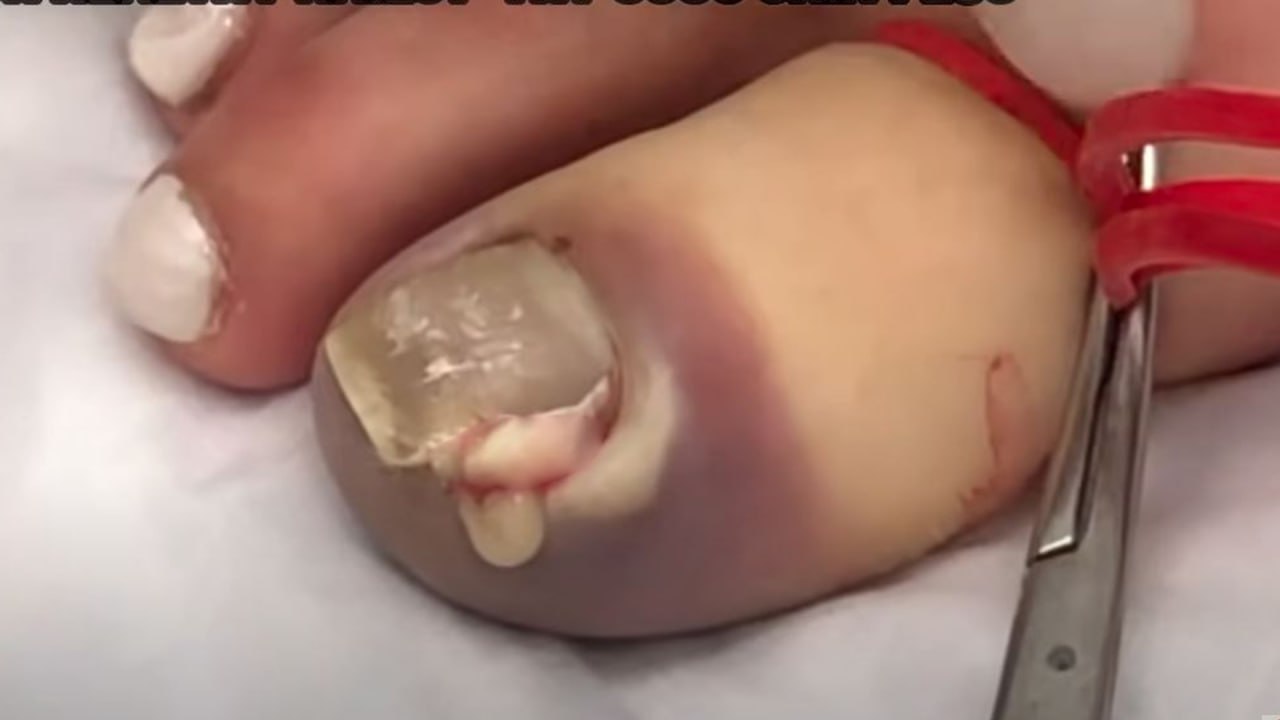
Early symptoms of an ingrown toenail infection include pain when walking or touching the toe, sensitivity along the nail edge, and mild swelling. As the condition worsens, the pain intensifies, the skin becomes more inflamed, and drainage of pus may begin. In severe cases like the one shown, the infection can spread deeper into the tissues, increasing the risk of serious complications.
Proper treatment usually involves cleaning the area thoroughly and allowing a trained professional to relieve the pressure by draining the infection. A healthcare provider may lift or partially remove the affected nail, ensuring the skin has space to heal. This procedure must be performed under sterile conditions to avoid spreading bacteria. Afterward, antibiotics may be prescribed to clear any remaining infection.
Preventing ingrown toenails is much easier than treating a severe infection. One of the most important steps is trimming the toenails correctly—straight across rather than curved. Wearing comfortable, breathable footwear that does not squeeze the toes is equally important. Maintaining good foot hygiene, especially after exercise or long periods of walking, can also reduce the likelihood of infections.
For people who experience repeated ingrown toenails, especially those with diabetes or circulation issues, professional foot care is strongly recommended. These individuals are at a higher risk of complications, and even small infections should be taken seriously.
In conclusion, the condition illustrated in the image is a clear example of how an untreated ingrown toenail can escalate into a painful and potentially dangerous infection. Understanding the causes, recognizing the warning signs, and seeking timely medical care are essential steps in preventing further damage. Proper foot care and early treatment can make a significant difference in maintaining healthy toes and avoiding long-term problems.