The image shows a swollen, red, and painful-looking abscess located on the upper chest area. At the center of the swollen region, there is a pale-yellow buildup under the skin, indicating the presence of pus. This type of infection commonly develops when bacteria enter a hair follicle, gland, or small break in the skin. Over time, the infection becomes trapped inside the tissue, leading to inflammation, swelling, and fluid accumulation. The appearance in the picture suggests a mature abscess that is under pressure and may require immediate medical drainage.
Chest abscesses can occur for many reasons. One of the most common causes is a bacterial infection from Staphylococcus aureus, which can rapidly multiply beneath the skin. Sometimes, a small insect bite or unnoticed scratch can introduce bacteria into deeper layers of tissue. Poor hygiene, weakened immune systems, or excessive sweating can also increase the risk. Once an abscess begins forming, the body reacts by sending immune cells to fight the infection, creating the thick yellow or white pus visible in the image.
Symptoms of a chest abscess typically include redness, warmth, swelling, throbbing pain, and tenderness. As the infection worsens, the skin may become shiny or tight due to the buildup of pressure. In more advanced cases, the abscess may begin to feel soft in the center because the tissue underneath is breaking down. Some individuals may also experience fever, chills, or fatigue if the infection starts spreading into the bloodstream. These signs indicate that medical attention is critical.
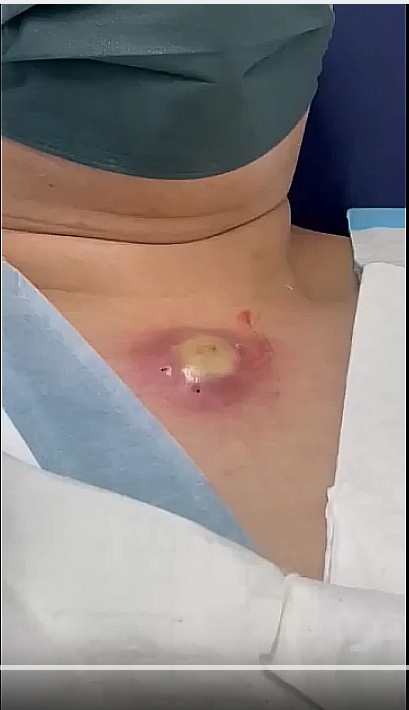
Treatment for an abscess like the one shown usually requires a minor medical procedure. A healthcare professional will clean the area, apply local anesthesia, and make a small incision to allow the pus to drain. This process immediately relieves pressure and helps stop the spread of bacteria. After drainage, the wound is gently cleaned and sometimes packed with sterile gauze to ensure it continues draining properly. Antibiotics may be prescribed for more severe infections or for patients with weakened immune systems.
Attempting to squeeze or pop an abscess at home is dangerous. Doing so can push the infection deeper into the body, cause more swelling, or create new pockets of bacteria. In worst cases, improper handling can lead to cellulitis, bloodstream infection, or scarring. Therefore, it is always recommended to let trained medical professionals handle abscess drainage.
Prevention plays an important role as well. Keeping the skin clean, showering after sweating, and treating even minor cuts or scrapes promptly can greatly reduce the risk of infection. Individuals with chronic skin conditions, diabetes, or weakened immune systems should pay extra attention to small wounds because these can turn into abscesses more quickly.
In summary, the wound shown in the image is a severe chest abscess that needs professional medical care. Recognizing the signs of infection early—such as redness, swelling, and pus buildup—allows for faster and safer treatment. Proper drainage, hygiene, and follow-up care are essential for full healing and preventing complications in the future.