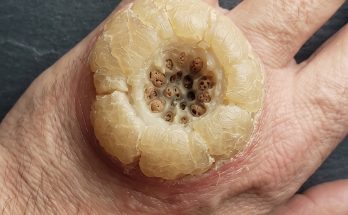
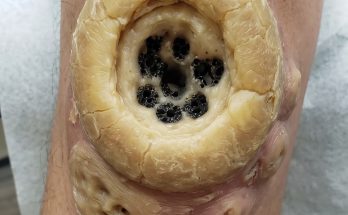
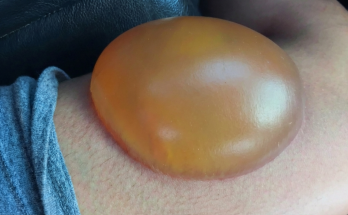
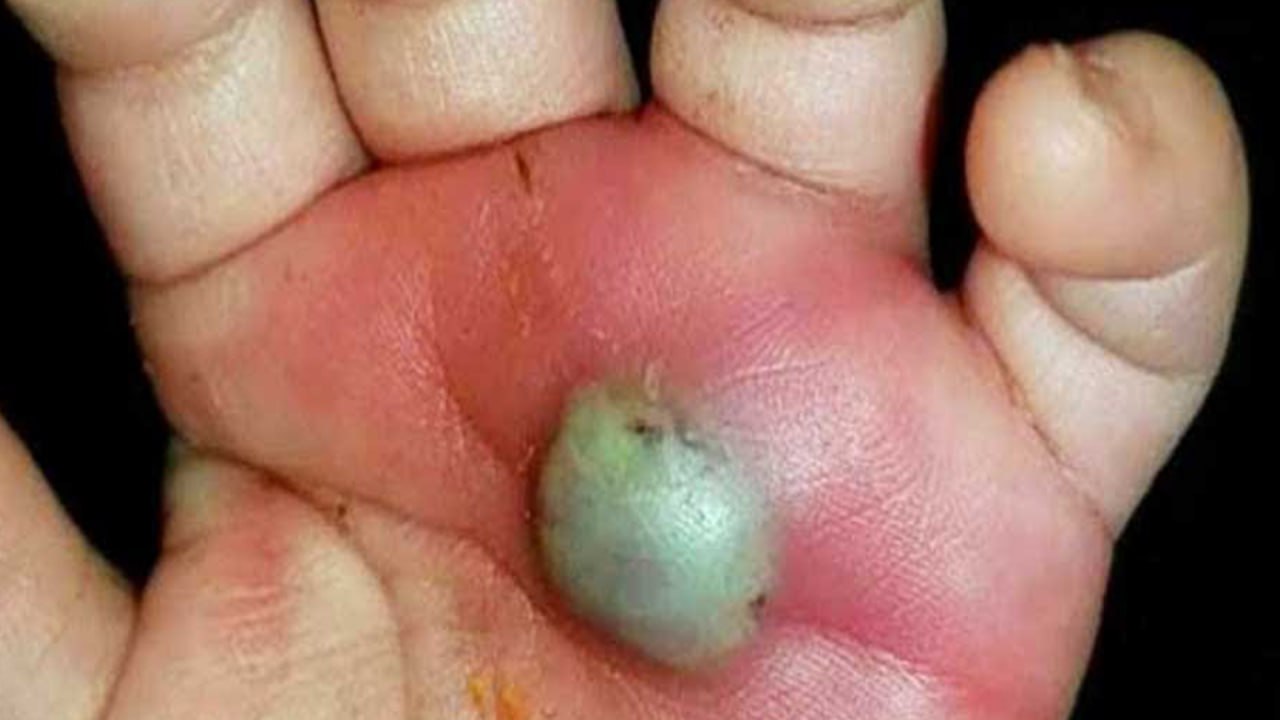
The image shows a hand with significant swelling, redness, and a large, tense, fluid-filled bump at the center of the palm area. This appearance is strongly suggestive of a painful inflammatory process, often seen in cases such as a hand abscess, infected blister, or a severe localized skin infection. Conditions like this can occur due to a small puncture wound, insect bite, dirty scratch, or even a minor cut that allows bacteria to enter the skin. Once bacteria multiply inside the soft tissue, the body reacts by sending immune cells to fight the infection, forming pus and causing a swelling that looks similar to what is shown in the picture.
Hand infections are particularly dangerous because the hand contains many small compartments, tendons, and nerves. Swelling can spread quickly, and infection can move deeper beneath the skin. If left untreated, it may affect muscles, tendons, or even bone, leading to long-term complications. The redness and shiny appearance of the skin suggest significant inflammation, and the greenish bump indicates a pocket of pus trapped beneath the skin. This buildup of pus increases pressure and causes severe pain. It also signals that the body is struggling to contain the infection.

There are several common causes of hand abscesses. One of the most frequent is Staphylococcus aureus bacteria entering through a small break in the skin. Even a tiny wound can become infected if not cleaned properly. Another cause is insect bites, which introduce bacteria or trigger skin reactions that develop into secondary infections. Children are especially prone to hand infections because they frequently touch surfaces, play outdoors, and sometimes scratch or pick at minor wounds.
Symptoms of an abscess include swelling, throbbing pain, heat, redness, and visible fluid buildup. As the infection progresses, the skin may turn darker or develop a bluish-green color, which is commonly associated with trapped pus. In severe cases, the person may also experience fever, chills, or difficulty moving the affected fingers. When symptoms reach this stage, urgent medical care is required.
Treatment depends on the severity of the infection. A small, early infection might respond well to warm compresses and antibiotics. However, once a noticeable abscess has formed—like the one shown—the infection rarely goes away on its own. A trained healthcare professional must drain the pus safely using sterile technique. Attempting to squeeze or pop an abscess at home is extremely dangerous and can push bacteria deeper, worsen the infection, or cause scarring.
After drainage, the area must be kept clean, covered, and monitored for signs of improvement. Antibiotics may also be prescribed to ensure complete healing. Good hygiene practices, such as washing hands regularly and cleaning wounds immediately, help prevent infections from forming in the first place.
In summary, the image reflects a serious and painful hand abscess requiring urgent attention. Recognizing early warning signs and seeking timely treatment are crucial to preventing complications. Proper care not only helps the hand heal but also protects overall health and prevents long-term damage.