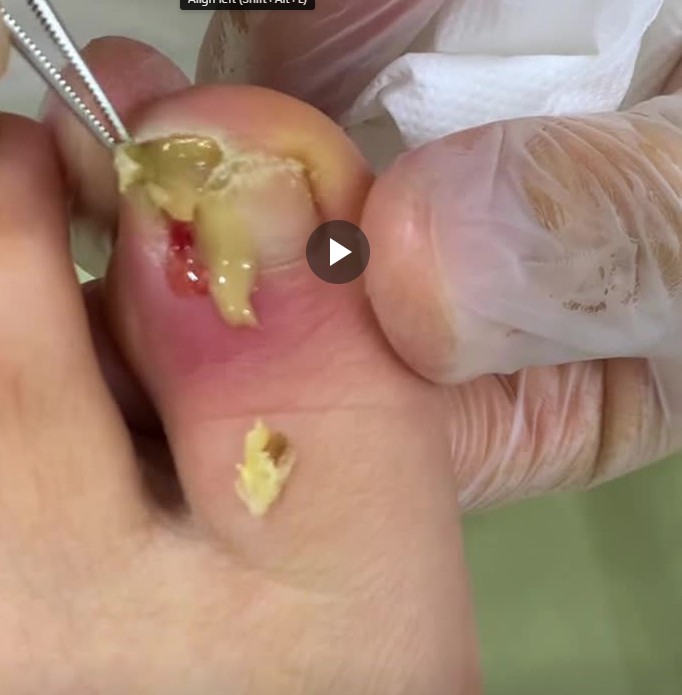
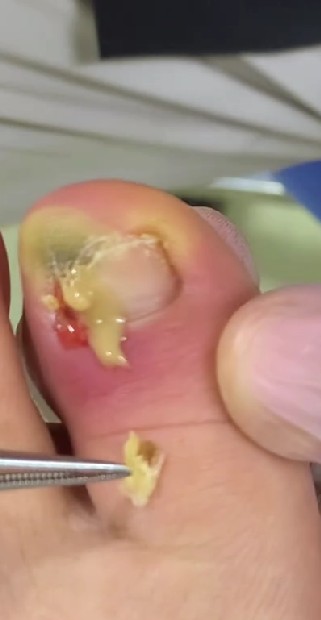
The image shows a toe with a visibly swollen, reddish area surrounding the nail, along with yellowish discharge and signs of active infection. This condition is commonly known as an infected ingrown toenail (paronychia). It occurs when the corner or side of the toenail grows into the surrounding skin, causing irritation, inflammation, and, if untreated, bacterial infection. Understanding this condition is important because infected toenails can worsen quickly, leading to severe pain and complications if not treated properly.
An ingrown toenail typically begins with mild discomfort, but as the nail continues to press into the soft skin, the area becomes tender and visibly swollen. When bacteria enter the irritated skin, an infection develops, leading to the accumulation of pus, which is seen as the yellow discharge in the image. This discharge is the body’s reaction to infection, trying to expel bacteria and dead tissue. The reddish color around the nail indicates inflammation, while the yellowish substance on top of the nail bed suggests localized infection that may require professional treatment.
Several factors can cause or worsen ingrown toenails. Improper nail trimming, such as cutting nails too short or rounding the edges too deeply, is one of the most common reasons. Tight footwear, constant pressure on the toes, toe injuries, and naturally curved nails also increase the risk. People who sweat heavily or have poor foot hygiene may be more prone to infection because moisture creates an ideal environment for bacteria to thrive.
The symptoms of an infected ingrown toenail usually include pain, swelling, warmth, redness, and the presence of pus. In more advanced cases, walking becomes difficult due to pressure and tenderness. Without treatment, the infection can spread to deeper layers of the toe, potentially affecting tendons or even bone in severe situations. That is why early care is extremely important.
Treatment for infected ingrown toenails often begins with proper cleaning and soaking the foot in warm water to reduce swelling and soften the skin. However, when pus is present—as seen in the picture—professional care is strongly recommended. A healthcare provider may gently drain the pus, remove infected tissue, and clean the area thoroughly. In some cases, trimming or partially removing the ingrown portion of the nail helps relieve pressure and prevent future infections.
Antibiotics may be prescribed if the infection is severe or spreading. The toe should be kept clean, dry, and covered with a sterile dressing. Avoiding tight shoes and putting minimal pressure on the toe allows for faster healing. Once healed, preventive measures are essential: always trim nails straight across, avoid digging into the sides of the nail, and choose footwear that gives the toes enough room.
In summary, the condition shown in the image represents a moderate to severe infected ingrown toenail. Recognizing the signs early and seeking proper care can prevent complications and speed up healing. With the right approach, most people recover fully and can take simple steps to avoid recurring problems.