his image shows a serious wound located on the bottom of the foot, featuring a deep central opening surrounded by yellow tissue and whitish skin changes. Such a wound often indicates a combination of infection, tissue breakdown, and pressure-related damage. To understand this condition better, it is important to look at the possible causes, symptoms, risks, and essential care steps needed to prevent complications.
A deep plantar wound like this commonly occurs in individuals who experience prolonged pressure on the foot, poor blood circulation, or underlying health conditions such as diabetes. When constant pressure is applied to the same area—especially the ball of the foot—the skin begins to thicken, break down, and eventually develop an ulcer. If bacteria enter the opening, the wound can become infected, leading to the yellowish or dark appearance seen in the image.
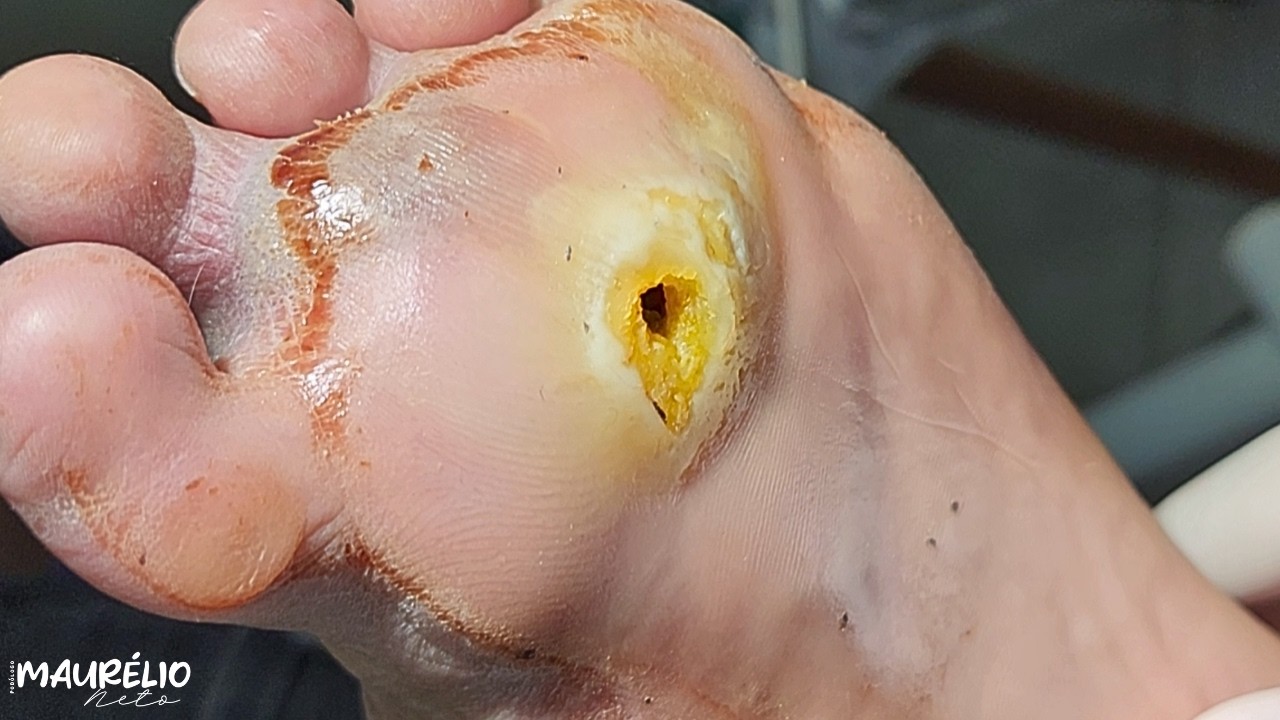
The yellow area inside and around the wound suggests the presence of slough, a type of dead tissue that forms during infection or poor healing. Slough prevents new skin from forming and must often be removed by a trained medical professional. The darker central hole may indicate tunneling or deep tissue damage, which requires immediate medical care. If left untreated, the infection may spread to deeper layers, including muscles or even bone, significantly increasing the risk of severe complications.
Pain, swelling, foul odor, and difficulty walking are common symptoms that accompany such a wound. Some individuals may not feel much pain, especially those with diabetic neuropathy, which reduces sensation in the feet. This can make the injury even more dangerous because the person may not notice the wound until it has already reached an advanced stage, as seen in the picture.
Proper care for such a wound involves several important steps. First, the area must be thoroughly cleaned and disinfected to reduce bacterial growth. A healthcare professional may debride the wound, removing dead tissue and allowing healthy tissue to grow. Offloading the foot—reducing pressure on the injured area—is essential for healing. Special footwear, padding, or complete rest may be required. Antibiotics may also be prescribed if signs of infection are present.
Keeping the wound covered with a sterile dressing protects it from further contamination. Regular dressing changes are crucial because moisture levels must be controlled to support healing. Too much moisture can worsen bacterial growth, while too little can slow down the healing process.
Because deep plantar wounds heal slowly and carry significant risks, anyone with a similar condition should seek medical attention immediately. Early treatment can prevent complications such as chronic infection, reduced mobility, or even the need for surgical intervention. Individuals with diabetes or circulation problems should perform daily foot checks to prevent minor injuries from becoming severe.
In summary, the wound shown in the image represents a serious medical condition that needs prompt and careful management. Understanding the causes, risks, and proper treatment steps can help prevent long-term damage and support recovery.