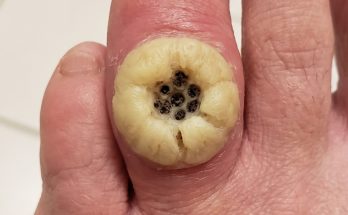
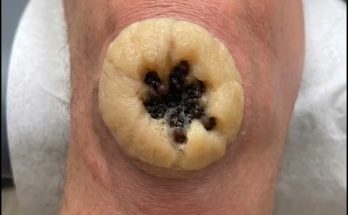
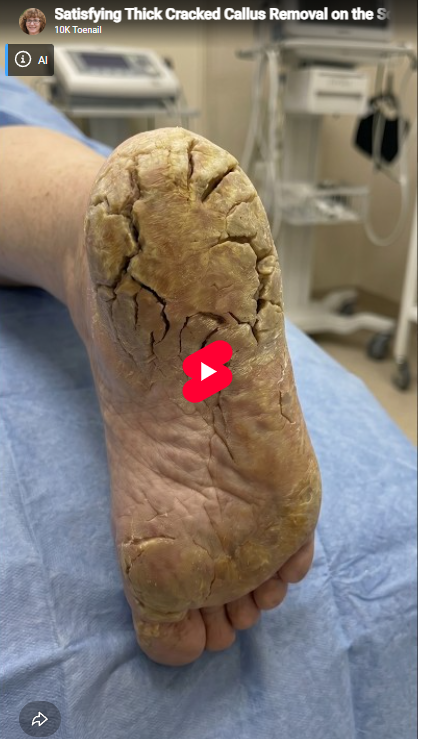
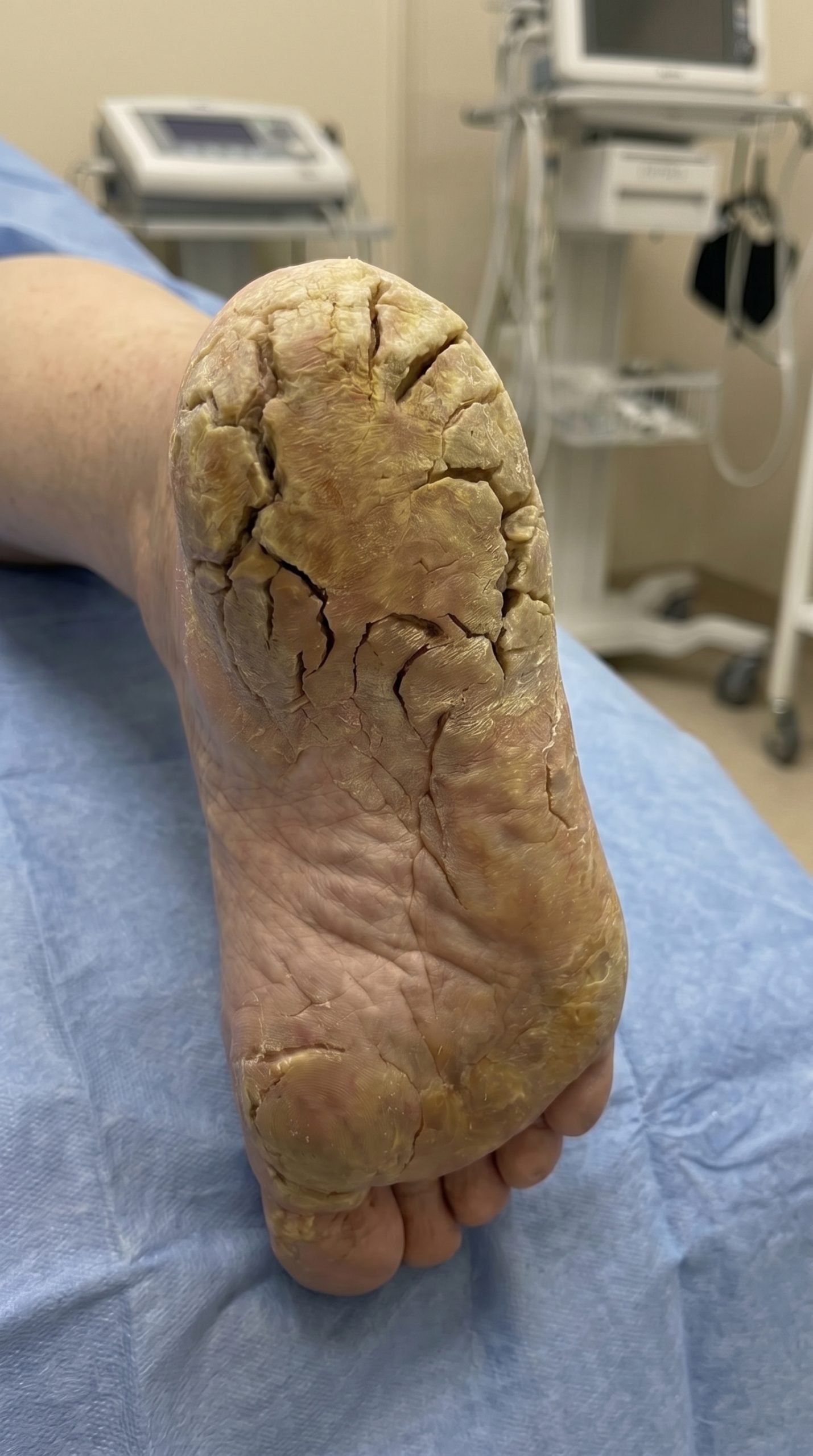
his close-up video shows a dramatic foot-care process involving a very thick, dry, and deeply cracked layer of hardened skin covering much of the sole. At the beginning of the clip, the bottom of the foot appears rough and heavily callused, especially around the ball of the foot and the heel. Large cracks run through the yellowish outer layer, creating a dry, uneven texture that stands out clearly from the softer skin around the edges.
The procedure begins when a wide, flat trimming blade is carefully positioned against the thickened surface near the front of the foot. The tool moves slowly underneath the hardened outer layer, lifting it away rather than making quick or aggressive cuts. As the blade advances, a large section of dry skin begins to separate in one continuous piece. The close camera angle makes every movement easy to see and emphasizes the contrast between the rough surface and the smoother-looking layer underneath
.
One of the most satisfying moments occurs when the lifted section peels back from the sole. The removed material appears thick, stiff, and heavily layered, showing how much hardened skin has built up on the surface. Beneath it, a smoother circular area with visible layered patterns is gradually revealed. The trimming tool continues to lift additional loose edges while the camera remains steady, allowing viewers to follow the transformation from beginning to end.
The video is especially engaging because of its clear before-and-after difference. At the start, the sole looks extremely dry, cracked, and covered by a dense callus-like layer. After the outer section is removed, the treated area looks flatter, cleaner, and more even. The slow blade movement and close-up detail give the clip a satisfying ASMR-style quality without requiring fast editing or dramatic camera movement.
Although the hardened skin shown in the video appears callus-like, appearance alone cannot confirm the exact condition. Thick or cracked skin may develop from repeated pressure, friction, dryness, or other skin problems. Deep cracks, pain, bleeding, redness, swelling, or recurrent thickening should be evaluated by a qualified healthcare professional.
People with similar foot problems should avoid aggressive cutting with sharp tools at home, because this can injure healthy tissue and increase the risk of bleeding or infection. Overall, the video delivers a striking and satisfying transformation, highlighting the gradual removal of a thick cracked surface layer and the smoother texture revealed underneath.