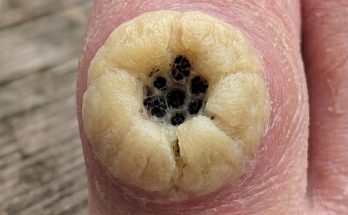
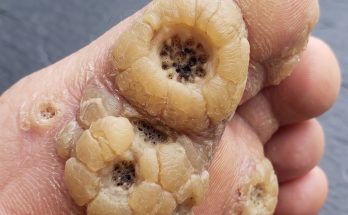
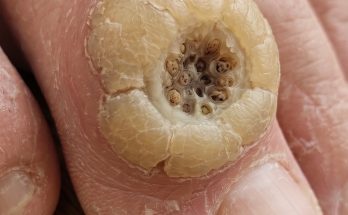
This close-up video captures a detailed skin-care process involving a thick, hardened circular area on a finger. At the beginning of the clip, the affected spot appears raised, dry, yellowish, and heavily layered. The outer surface has a rough, cracked texture, while the center looks darker and more compact. The surrounding skin appears slightly pink, creating a clear contrast between the normal skin and the thickened area.
The process begins when a flat trimming blade is carefully positioned along the upper edge of the hardened layer. The tool moves slowly and steadily, separating the thick outer skin from the surface beneath it. Instead of making deep cuts, the blade works around the circular edge, gently lifting the dry material little by little.
As the trimming continues, the outer ring begins to loosen. The camera remains close and steady, allowing viewers to see the texture change in real time. One of the most satisfying moments occurs when a large circular section of the hardened skin is lifted away almost in one piece. Once removed, a smoother and lighter ring is visible underneath, while the darker central area remains in place.
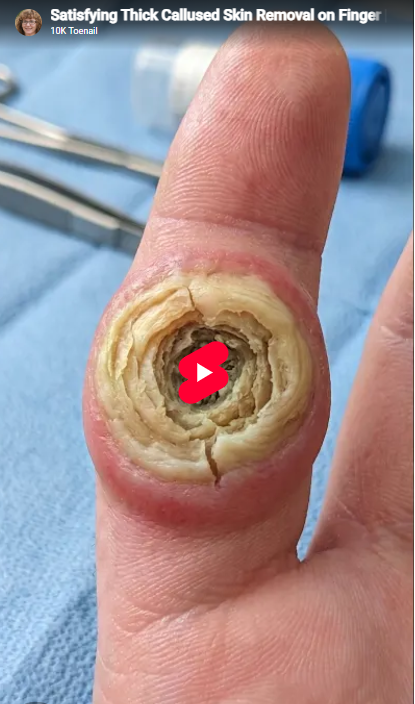
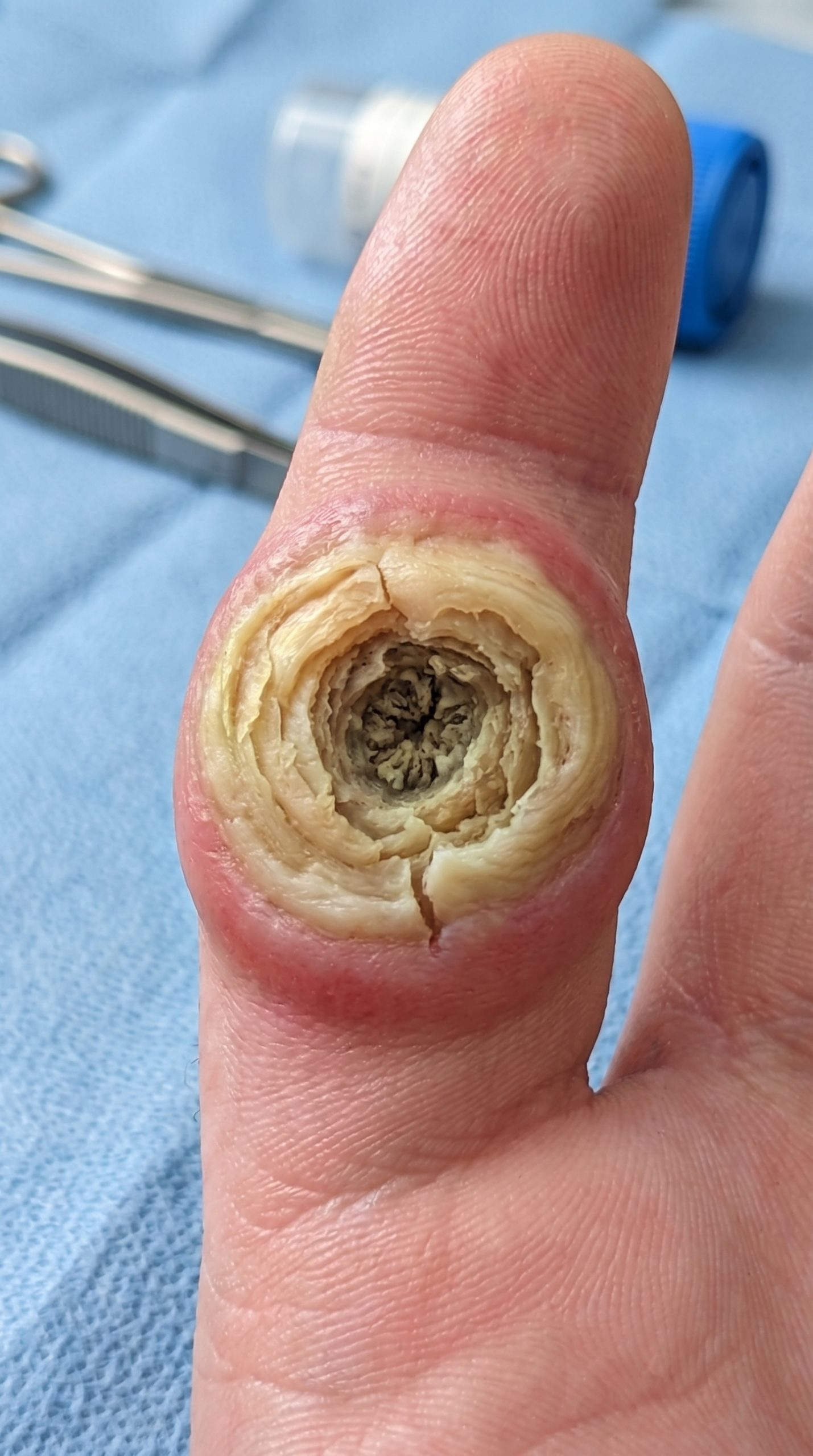
The video then continues with additional careful trimming around the remaining thick edges. Small sections are lifted and removed to create a cleaner, flatter appearance. The controlled tool movement, close-up camera angle, and visible before-and-after difference make the process especially engaging for viewers who enjoy detailed skin-care, callus-removal, and ASMR-style transformation videos.
Although the area in the video looks callus-like, appearance alone cannot confirm exactly what type of skin lesion is present. Thickened skin on a finger can develop for different reasons, including repeated pressure, friction, irritation, or other skin conditions. A lesion that is painful, bleeds, grows quickly, spreads, or repeatedly returns should be examined by a qualified healthcare professional.
People with a similar area should avoid aggressively cutting or digging deeply into the skin at home. Using sharp tools without proper technique can injure healthy tissue and may lead to bleeding, infection, pain, or delayed healing. Clean equipment, gentle care, and appropriate aftercare are important.
Each careful movement highlights the contrast between rough surface and newly exposed skin.
Overall, this short video delivers a satisfying and visually clear transformation. The gradual lifting of the thick outer ring, the precise blade movement, and the dramatic change in surface texture make the entire process interesting to watch from beginning to end.