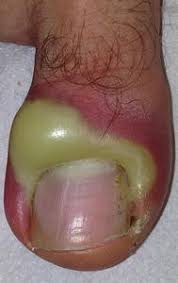
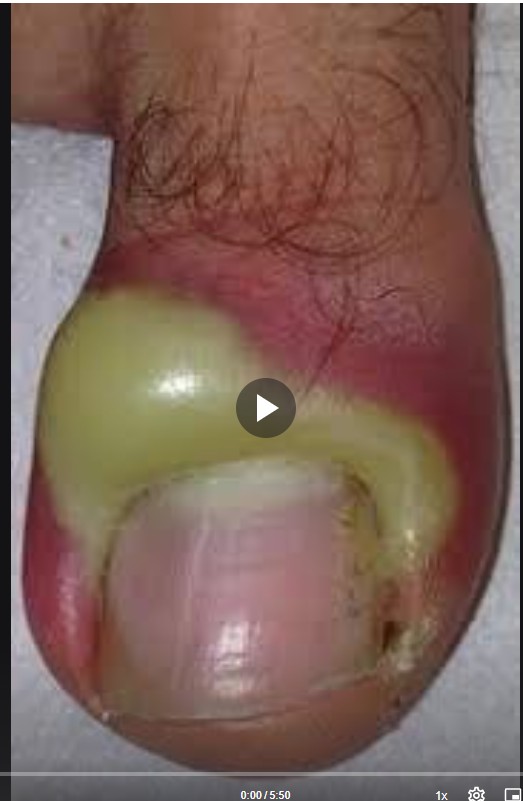
This image shows a severe case of an infected ingrown toenail, medically known as paronychia. The swollen, red skin around the nail is filled with pus — a clear sign that infection has developed beneath the surface.
What may start as a simple nail problem can quickly turn into a painful condition if not treated early. In advanced cases like this, pressure builds up under the skin, causing throbbing pain, swelling, and visible discharge.
What Causes an Ingrown Toenail Infection?
This condition often develops when the edge of the nail grows into the surrounding skin. Common causes include:
✔ Cutting nails too short or unevenly
✔ Wearing tight or narrow shoes
✔ Poor foot hygiene
✔ Nail trauma or injury
✔ Repeated pressure on the toes
Once bacteria enter the broken skin, infection begins — leading to pus formation like seen in the image.
Signs of a Serious Infection
From this case, you can clearly observe:
- Redness and swelling around the nail
- Yellow or green pus buildup
- Pain and tenderness when touched
- Skin inflammation and possible bleeding
- Risk of spreading infection if untreated
This stage requires immediate attention to prevent worsening complications.
What Happens During Treatment?
In the full procedure video, medical professionals carefully relieve the pressure and remove the infection by:
✔ Draining the pus from the swollen area
✔ Removing the ingrown nail edge
✔ Cleaning and disinfecting the wound
✔ Reducing inflammation and promoting healing
The moment the pressure is released is both pain-relieving for the patient and surprisingly satisfying to watch.
When Should You Seek Medical Help?
Do not ignore symptoms like:
- Persistent pain in the toe
- Swelling or redness that worsens
- Visible pus or discharge
- Difficulty walking
- Fever or spreading redness
Early treatment can prevent the need for more invasive procedures.