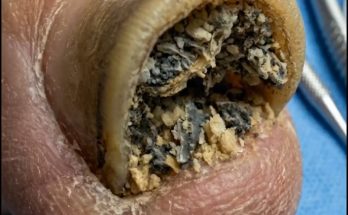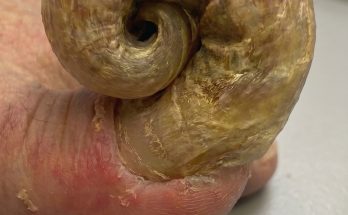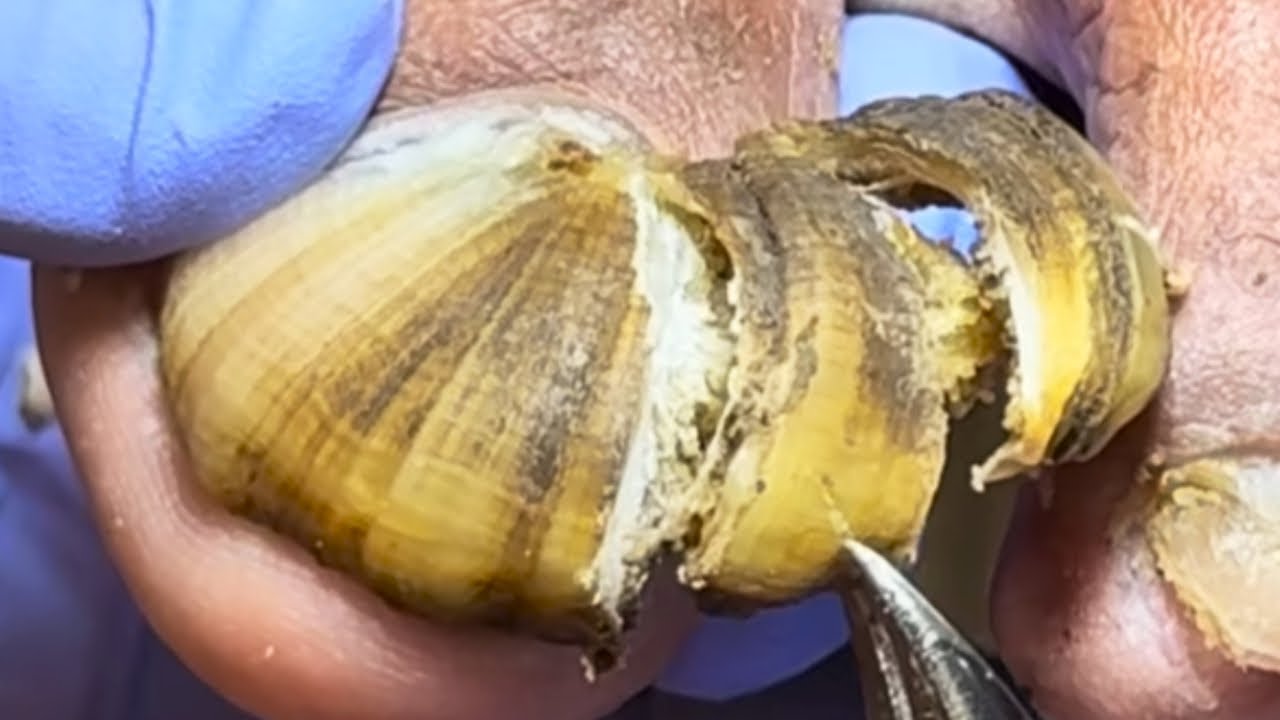
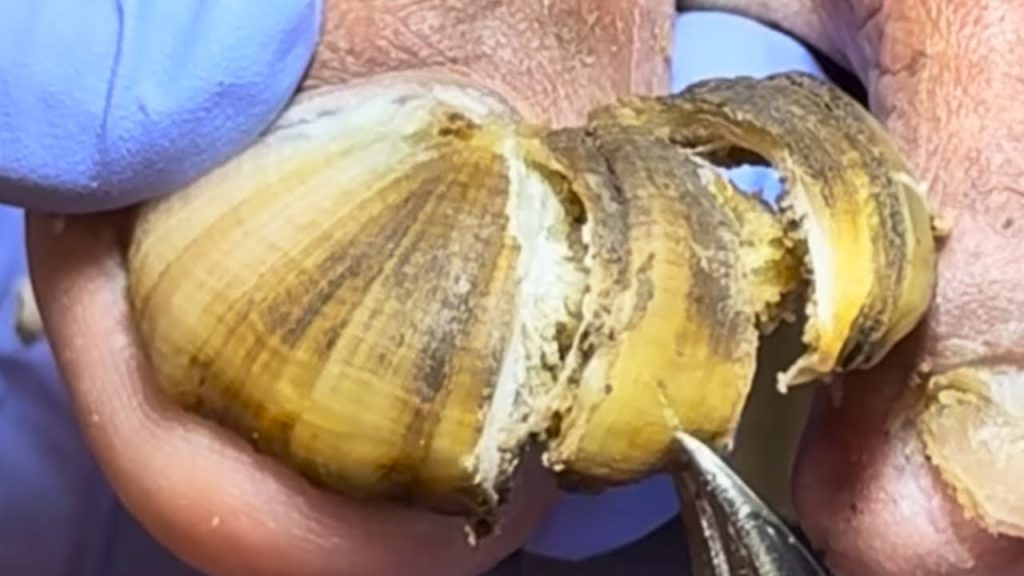
The image above highlights a severe toenail condition where the nail has become extremely thick, hardened, and curved into an abnormal shape. This condition, medically known as onychogryphosis, develops gradually over time and is often overlooked until it reaches an advanced stage. When untreated, it can cause pain, mobility issues, and serious foot health complications.
What Causes Toenails to Become This Thick?
Extreme toenail thickening is commonly linked to long-term fungal infections, poor circulation, aging, diabetes, repeated trauma, or neglect of regular nail care. As the nail matrix becomes damaged, the nail grows unevenly. Over time, layers of dead keratin accumulate, making the nail harder, darker, and more distorted.
In many cases, the nail begins to curve and twist, pressing into surrounding skin and increasing the risk of infection or open wounds.
Health Risks of Ignoring Severe Nail Overgrowth
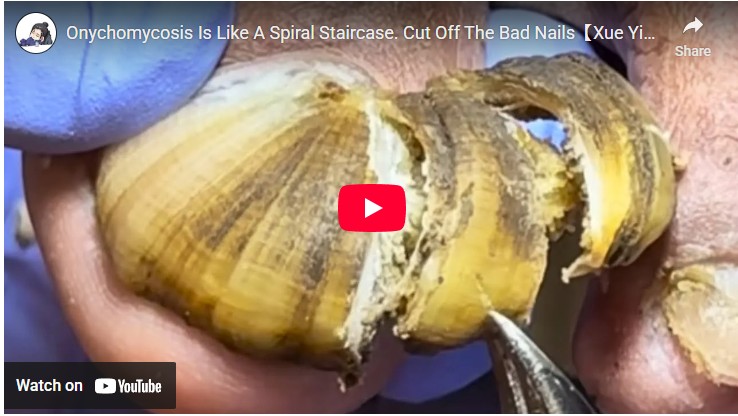
When toenails reach this condition, everyday activities such as walking or wearing shoes can become painful. Thickened nails trap moisture and bacteria underneath, creating an ideal environment for infection. If left untreated, complications may include ingrown nails, skin breakdown, inflammation, and secondary bacterial infections.
For individuals with diabetes or circulation problems, these risks are even more serious, as healing becomes slower and infections can spread quickly.
Why Professional Treatment Is Essential
Severely thickened toenails should never be cut at home using regular nail clippers. The hardness of the nail increases the risk of cracking, bleeding, or damaging the nail bed. Professional foot care specialists and podiatrists use specialized tools to safely reduce nail thickness and restore a more natural shape.
In many cases, antifungal treatments are applied after trimming to prevent the condition from returning. Proper treatment not only improves appearance but also relieves pressure and discomfort almost immediately.
Preventing Future Toenail Problems
Maintaining healthy toenails starts with consistent foot hygiene. Nails should be trimmed regularly, feet kept clean and dry, and breathable footwear worn whenever possible. Early signs of fungal infection—such as discoloration or thickening—should be treated promptly to avoid progression.
Regular foot examinations are especially important for older adults and individuals with chronic health conditions.
Conclusion
Extreme toenail overgrowth is more than a cosmetic concern—it is a medical condition that requires proper attention. With professional care and early intervention, even severe cases can be managed safely, improving comfort, mobility, and overall foot health.