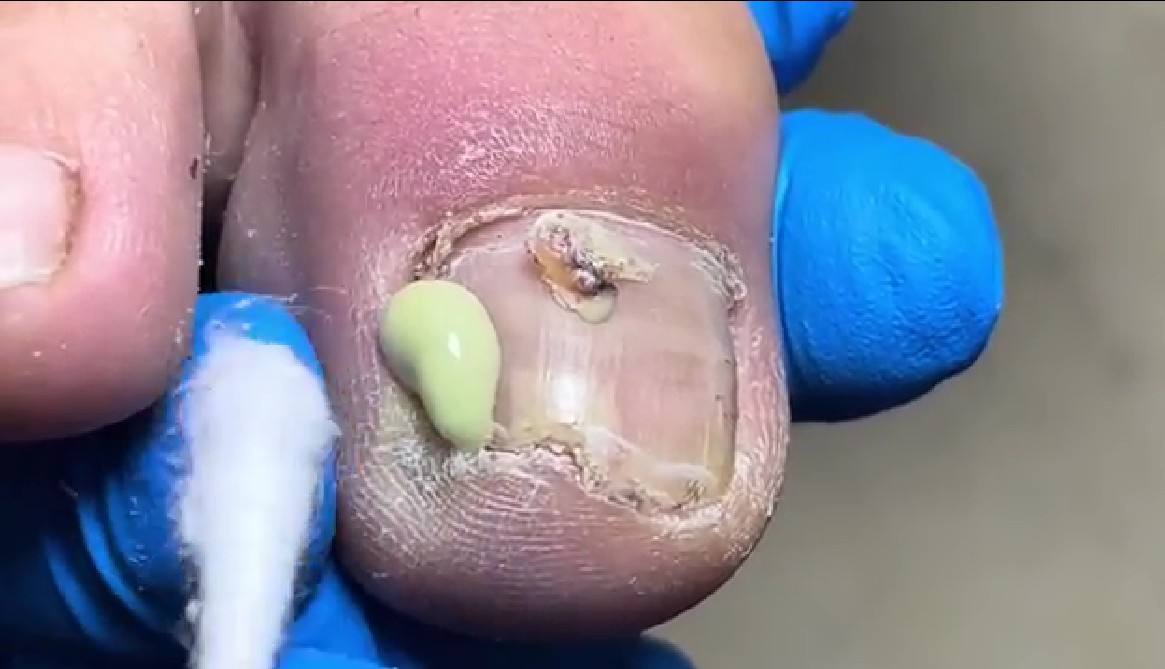
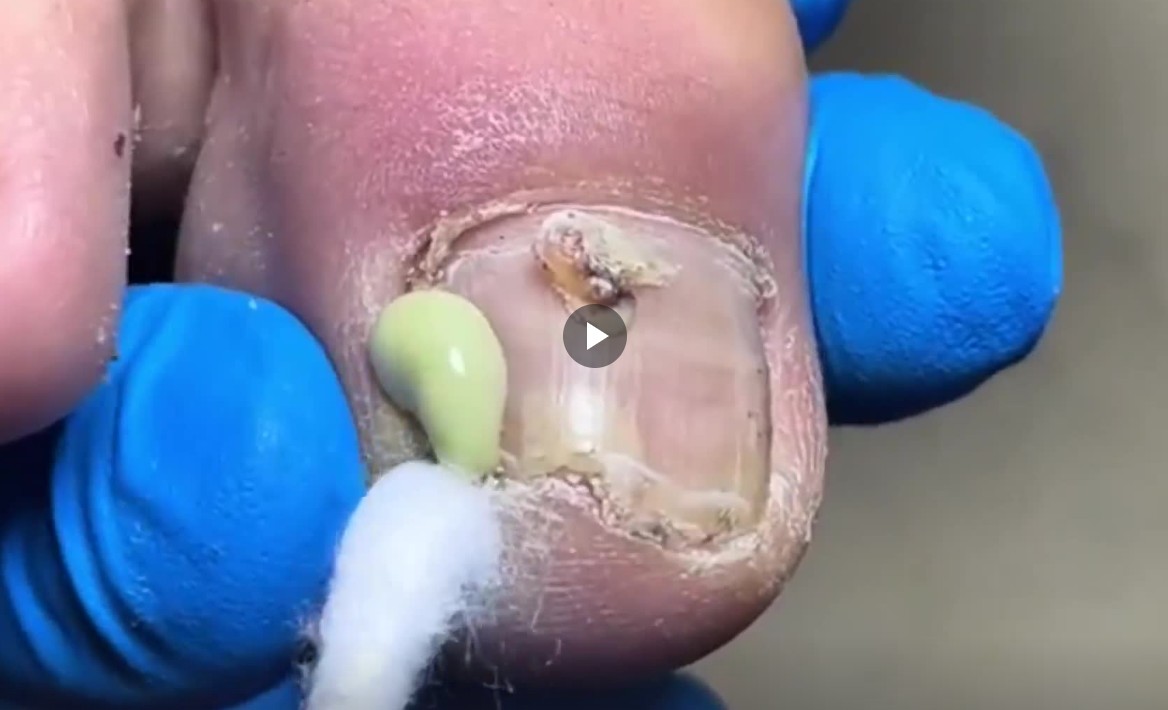
A severe toenail infection is a painful and potentially dangerous condition that develops when bacteria invade the skin around or beneath the nail. The image above shows a clear example of an advanced infection, with thick yellow-green pus emerging from the side of the toenail. This type of infection often indicates an abscess and requires immediate attention to prevent further complications.
Why Toenail Infections Become Severe
Toenail infections usually start from minor issues such as ingrown nails, nail trauma, or cracks in the surrounding skin. When harmful bacteria enter these openings, they thrive in warm and moist conditions inside shoes. Over time, the infection worsens, leading to swelling, redness, intense pain, and pus formation.
Improper nail trimming, walking barefoot in contaminated areas, wearing tight footwear, and ignoring early symptoms can all contribute to the progression of the infection. Individuals with diabetes, poor circulation, or weakened immune systems are especially vulnerable to severe nail infections.
Warning Signs You Should Not Ignore
An advanced toenail infection often presents with throbbing pain, visible pus, tenderness, and skin discoloration around the nail. The nail itself may appear damaged, brittle, or partially detached. In some cases, the infection produces an unpleasant odor, signaling bacterial growth beneath the nail plate.
If left untreated, the infection can spread to nearby tissues, bones, or even enter the bloodstream, making early intervention critical.
Safe and Effective Treatment Options
Mild toenail infections may improve with proper foot hygiene, warm saltwater soaks, and antiseptic applications. However, when pus is visible, professional medical care is strongly recommended. A healthcare provider can safely drain the abscess, clean the infected area, and prescribe appropriate antibiotics if necessary.
Attempting to squeeze or puncture the infected area at home can worsen the condition and increase the risk of permanent nail damage or scarring.
Prevention and Long-Term Foot Health
Preventing toenail infections starts with good foot care habits. Keep feet clean and dry, trim nails straight across, and avoid cutting nails too short. Wear breathable shoes and change socks regularly. Regular foot inspections are essential, especially for people with chronic health conditions.
Conclusion
A pus-filled toenail infection is a serious health issue, not just a cosmetic problem. Prompt treatment, proper hygiene, and preventive care are key to full recovery and maintaining healthy feet. Seeking professional medical advice at the first sign of infection can prevent long-term complications and protect overall well-being.