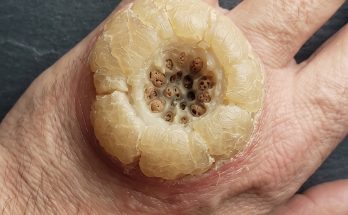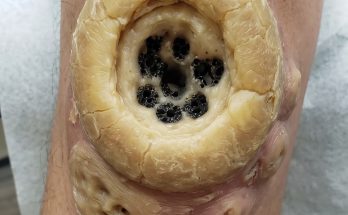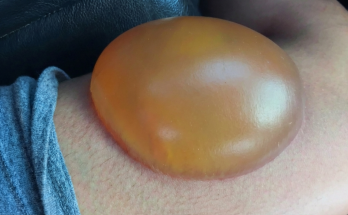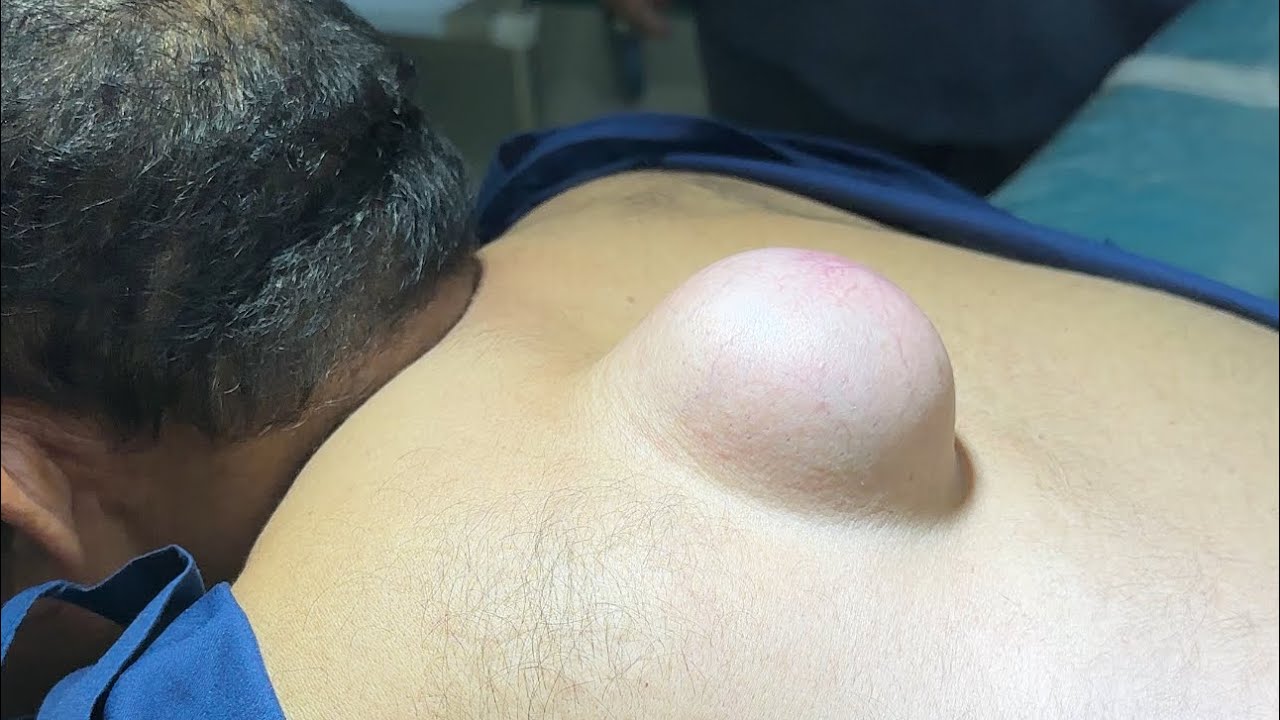
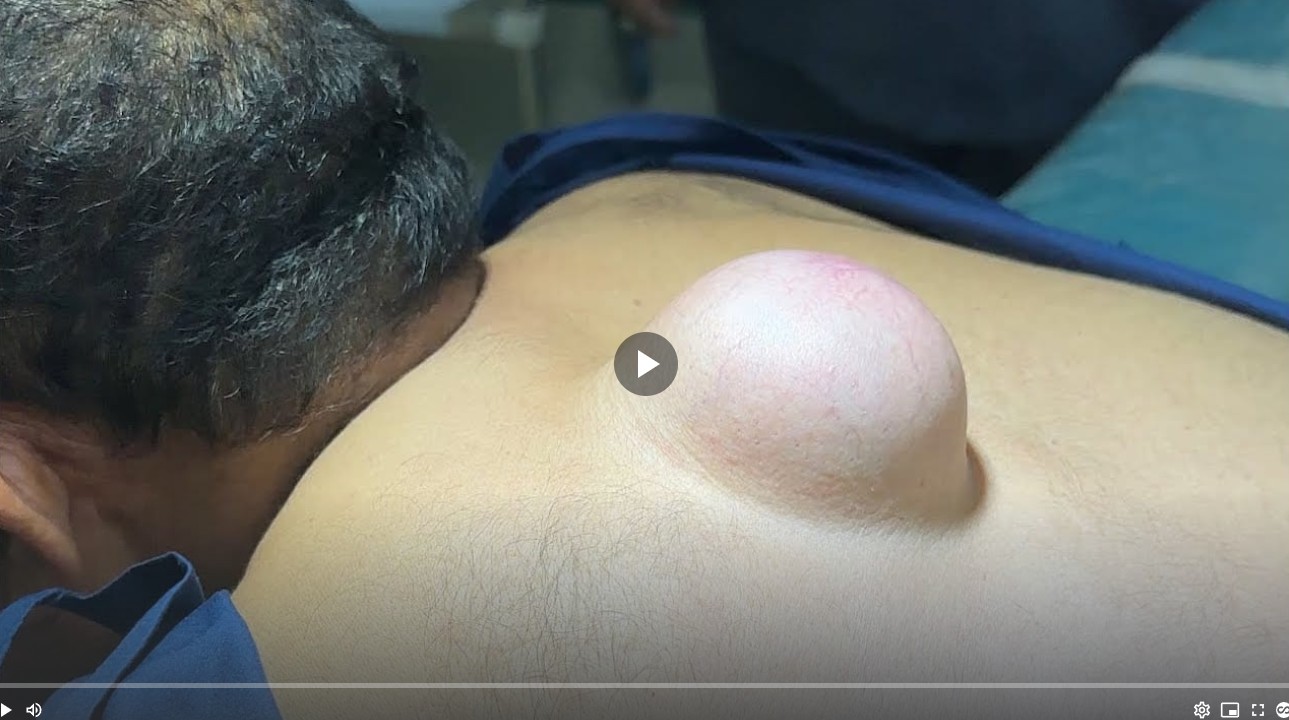
At first glance, this image shows an unusually large dome-shaped swelling on the upper back. Beneath the skin lies a growth that has likely developed slowly over months or even years. Conditions like this are most often caused by a giant lipoma, a benign tumor made of fatty tissue that forms under the skin.
While lipomas are generally harmless, some can grow to extraordinary sizes when left untreated. Because they are usually painless, many people ignore them until the lump becomes highly visible or begins to interfere with daily life.
What Could This Lump Be?
Medical experts commonly associate large, soft back swellings with:
✔ Lipoma (benign fatty tumor) — most common
✔ Epidermoid cyst — a sac filled with keratin material
✔ Soft tissue tumor — rare but possible
✔ Abscess or chronic infection — if redness or pain is present
In this case, the smooth, rounded appearance strongly suggests a large lipoma sitting just beneath the skin.
Why Do Giant Lipomas Develop?
Several factors can contribute to extreme growth:
-
Lack of early medical evaluation
-
No pain in the early stages
-
Genetic predisposition
-
Deep tissue location allowing expansion
-
Fear or avoidance of surgery
Over time, the fatty mass expands, stretching the skin into the dramatic bulge seen in the image.
What Happens During Removal?
Surgical excision is the most effective treatment. During the procedure, a doctor makes an incision over the lump and carefully separates the fatty tumor from surrounding tissues. Because lipomas are often encapsulated, they can sometimes be removed in one intact piece — a moment that many viewers find both shocking and fascinating.
The full video reveals:
✔ The precise surgical approach
✔ The incredible size of the tumor beneath the skin
✔ The extraction process step-by-step
✔ Immediate flattening of the area after removal
When Should You Seek Medical Advice?
You should consult a healthcare professional if a lump:
-
Continues to grow
-
Becomes painful or tender
-
Causes numbness or pressure
-
Limits movement
-
Changes color or texture
Early treatment makes removal simpler and reduces the risk of complications.