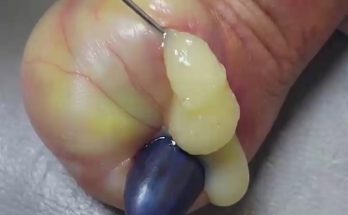
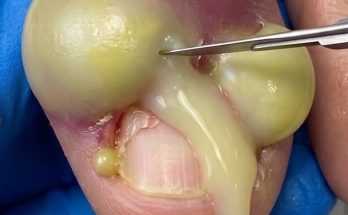
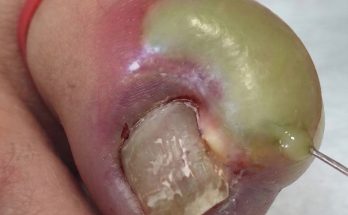
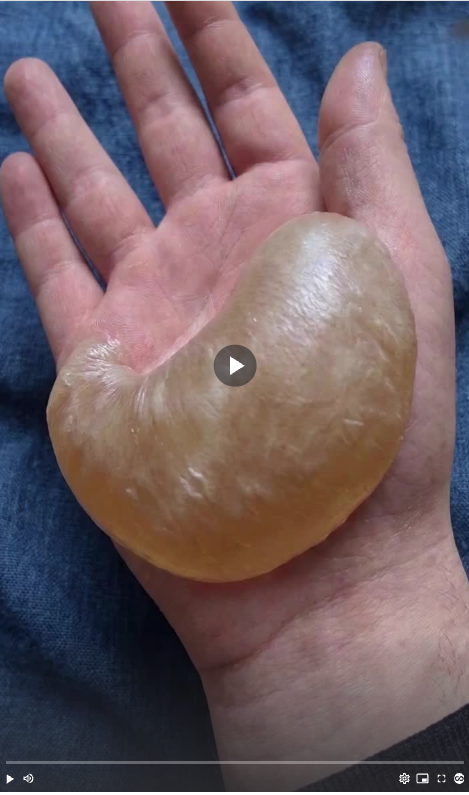
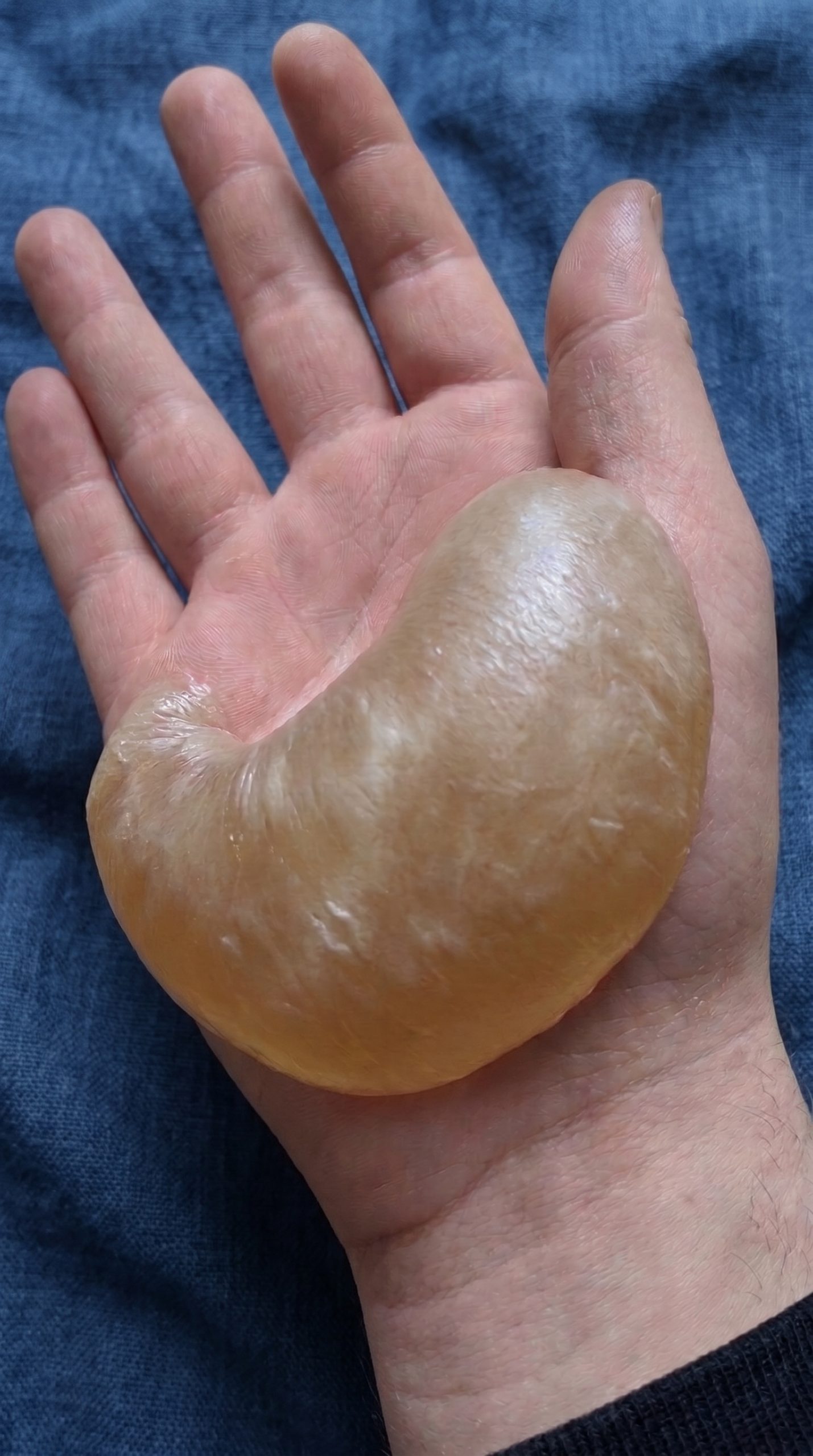
This close-up video presents a remarkable **large fluid-filled blister on the palm**, showing an unusually prominent swelling that covers a significant portion of the hand. At the beginning, the raised area appears smooth, tense, translucent, and yellow-brown, with the stretched surface reflecting light. Its size creates a dramatic contrast with the fingers and normal surrounding skin, making the swelling immediately noticeable.
The blister extends from the lower palm toward the base of the thumb and forms a large rounded pocket beneath the skin. Because the surface is thin and stretched, viewers can clearly see the difference between the affected area and the surrounding healthy-looking palm. The natural skin lines become distorted as the swelling expands, emphasizing how much fluid appears to have accumulated underneath.
The close-up camera angle makes this type of content especially interesting for viewers who follow **large blister videos, hand swelling, skin blister treatment, fluid-filled skin lesions, dermatology-style procedures, and satisfying skin care transformations**. Every change in texture, size, and surface tension can be observed in detail.
If the video continues into professional treatment, the most visually significant stage may involve careful assessment, controlled drainage, or protective wound care. As fluid is removed, a large blister may gradually collapse, producing a dramatic before-and-after visual change. The loose surface skin may remain afterward, so protecting the underlying tissue and keeping the area clean are important parts of proper aftercare.
From an SEO perspective, this content naturally matches search phrases such as **giant blister on hand, large palm blister, fluid-filled blister treatment, hand blister drainage, swollen palm skin, satisfying blister care, skin fluid pocket, and hand care transformation**. Using these phrases naturally can help search engines understand the subject without making the article sound repetitive or overloaded with keywords.
A photo or video alone cannot determine exactly why such a large blister developed. Blisters may occur after friction, burns, skin irritation, allergic reactions, trauma, or other medical conditions. Extremely large, painful, rapidly growing, red, warm, bleeding, or infected-looking blisters should be assessed by a qualified healthcare professional.
People with a similar blister should avoid cutting, peeling, or puncturing it at home with unsterilized tools because opening the skin can increase the risk of infection.
Overall, this video provides a striking look at an **extreme palm blister**, combining unusual size, detailed close-up visuals, visible skin stretching, and the potential for a dramatic hand-care transformation.